
Check packed carton measurements before comparing freight quotes
A freight quote is only comparable when it describes the same packed shipment. Before choosing a forwarder, check outer carton measurements, gross weight, carton count and any pallet or overpack. Treat product-page dimensions and unbuilt packaging estimates as provisional inputs, not dispatch measurements.
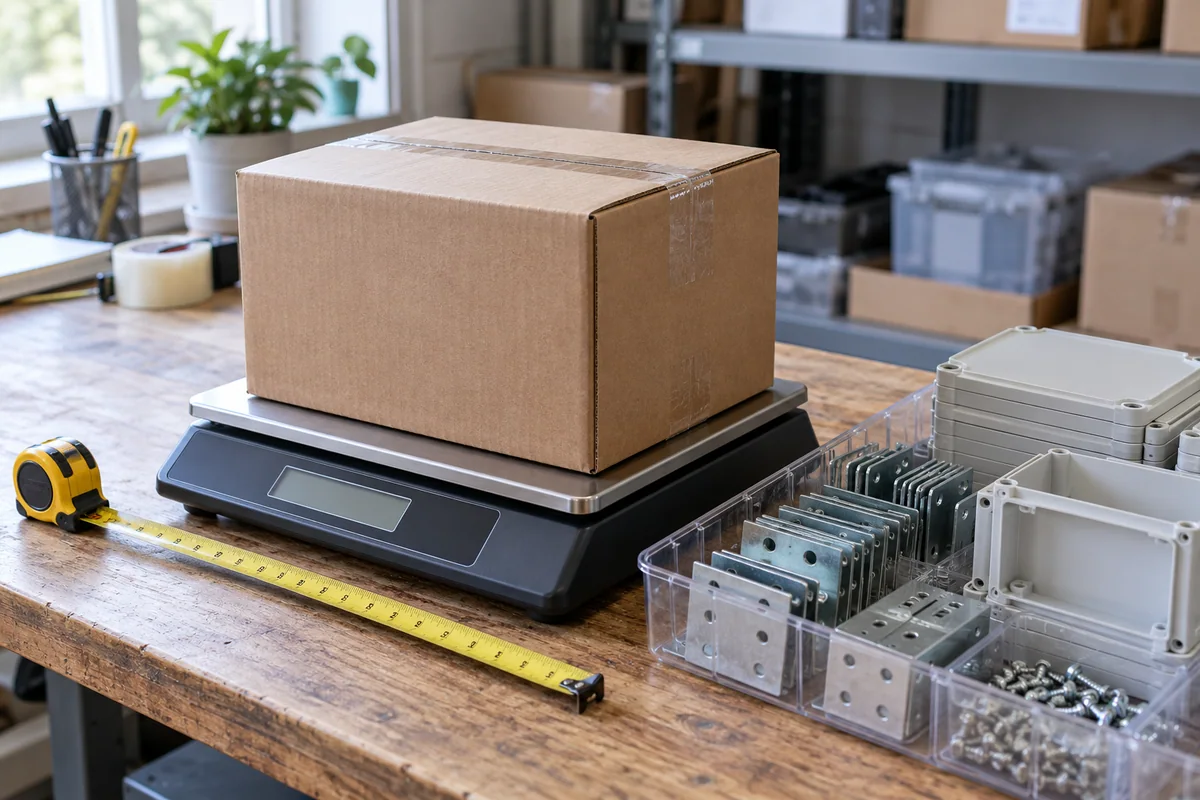
A freight quote is only comparable when it describes the same packed shipment. Before choosing a forwarder, check outer carton measurements, gross weight, carton count and any pallet or overpack. Treat product-page dimensions and unbuilt packaging estimates as provisional inputs, not dispatch measurements.
For a buyer consolidating goods from several China suppliers, the practical goal is a single packing record that every quoting provider can price. A lower rate applied to an understated box is not a saving you can approve confidently.
Start with the object being measured
Ask the supplier what each number describes: the bare product, its retail box, the export carton, or the final handling unit. These are different objects. A retail box measurement cannot stand in for a master carton holding twelve retail boxes. Likewise, a carton measurement does not describe a finished pallet.
Record one line per carton type, with a separate line for exceptions. Use these fields:
- SKU or contents and units per carton
- Number of cartons with that exact packing arrangement
- Packed outer length, width and height, with units stated
- Gross weight including the packaging, and net product weight separately
- Whether the figures are estimated, from a packing trial, or measured on ready goods
- Measurement date, packaging revision and the person or company supplying the data
- Pallet, crate, strap or overpack details when used
A packing list is a useful starting document. The US International Trade Administration explains that package measurements and weights help freight forwarders determine freight cost. That is documentation guidance, not a claim that one template is mandatory for every China shipment.
Ask how the provider will turn measurements into a bill
Request the service’s dimensional calculation, rounding rules, minimum charge and treatment of multiple pieces. Ask whether quoted dimensions will be checked again and how a discrepancy changes the charge. Keep the answer with the quote.
For one named example, DHL Express UK’s guidance uses length × width × height in centimetres divided by 5,000, then compares volumetric and actual weight. It describes calculating multiple packages separately. That example is not a universal divisor for every airline, forwarder or transport mode.
Do not merge centimetres and millimetres in a calculation. Do not compare a weight-based express result with an ocean quotation’s volume field without confirming the latter’s billing basis. The quote must tell you how physical measurements become chargeable quantities.
A small measurement change can reverse the comparison
The following is hypothetical arithmetic, not a carrier quotation. Assume four identical cartons, each weighing 12 kg gross, and a service using a 5,000 cm³/kg divisor. Ignore rounding, minimums and other charges to isolate the dimension effect.
The provisional carton size is 50 × 40 × 30 cm. Each carton is 60,000 cm³ and has a volumetric weight of 12 kg. Four cartons therefore produce 48 kg of chargeable weight under these assumptions.
The finished carton is actually 52 × 42 × 32 cm. Each is 69,888 cm³, giving 13.9776 kg volumetric weight. Across four cartons that is 55.9104 kg before service-specific rounding, rather than 48 kg.
At an invented transport-only rate of USD 4 per chargeable kilogram, the calculation changes from USD 192 to USD 223.64, rounded to cents. The difference is USD 31.64, approximately 16.48%. Nothing about the rate changed; the physical input did.
The correct response is to send the revised record to all providers. Do not apply one provider’s revised weight to another provider’s rate without checking that both use the same measurement and charging rules.
Build a lightweight measurement approval gate
Before final quote approval, obtain photos showing the completed packing arrangement and the measuring method. A photo is supporting evidence, not a calibrated dimensional audit. If the figures conflict with prior records, ask the warehouse to remeasure the actual packed goods using the selected provider’s rules.
Confirm that measured cartons represent the full order. Mixed sizes, spare parts, promotional inserts and replacement units need their own lines. If only a trial carton exists, keep the quote provisional and specify who will update it when production is packed.
Reconcile three totals: unit quantity from the order, unit quantity in the packing record, and carton quantity in the quote. A correct dimension is not enough if one of ten cartons was omitted. Review gross weight separately from quantity; an unexplained difference may indicate changed packaging or missing contents, but it is not proof of either.
Set a change trigger: new carton size, different carton count, added pallet, revised protection or changed shipment mix means the packing record goes back for review. Preserve the old revision so you can see exactly why the estimate moved.
When smaller packaging is the wrong target
Do not remove protective material merely to reduce dimensional weight. Ask a packaging specialist whether an alternative configuration can protect the actual product through the chosen handling chain. For regulated goods, qualified personnel must also confirm the applicable packaging requirements.
A smaller box can be worth testing if unused space is avoidable. It is unsuitable when it compromises product protection, mandatory packaging, safe handling or receiving requirements. Compare the cost of the validated configuration, including repacking labor and materials, rather than a theoretical minimum-size carton.
Your next step is simple: ask for one dated packed-carton record and request that every freight quote reference its revision. That gives the sourcing and logistics teams a shared physical basis before they discuss price.
Frequently asked questions
Can I use the dimensions on a 1688 product listing?
Only as a clearly labeled estimate until the supplier confirms what they describe. Request final packed export-carton measurements before approving a shipment-specific quote.
Should I round the measurements myself?
Retain the measured values and ask the selected service how dimensions and chargeable weight are rounded. Avoid applying an assumed rule across providers.
Do I need to measure every carton?
Ask the warehouse and provider for an appropriate verification method. At minimum, distinguish every packing type and exception; a trial carton alone does not establish every carton in a finished order.
Is a smaller carton always cheaper?
No. Any saving depends on the charging basis and packing cost. A proposed reduction must also preserve protection, compliance and handling suitability.
Sources
Discuss a sourcing request related to this article.Check packed carton measurements before comparing freight quotes