
Return, replace or remedy an imported order locally?
Compare return, replacement and authorized local remedy using future cash costs, useful output, timing and written approvals.
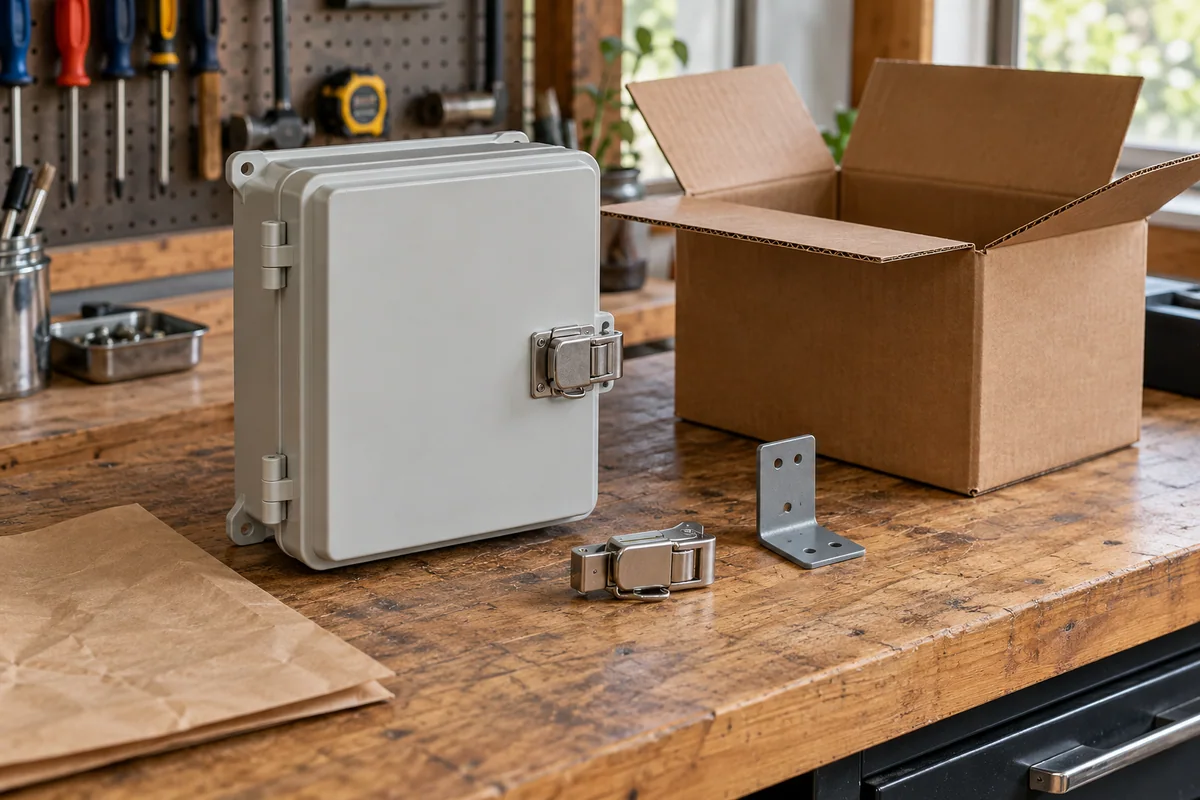
Choose the recovery option that meets your required quantity and timing at an acceptable incremental cost. Do not decide from the original unit price or a supplier’s offer of “free replacements” alone. A return may require inspection, export and import work, additional freight and a written agreement about what happens when the goods arrive.
Start by asking whether a proposed option is permissible and safe. Only then compare its economics. This framework is for purchasing decisions; it does not authorize a return, establish refund rights or provide repair instructions.
First, define the result you need
Write down the number of units that failed acceptance, the specific defect, the number needed for the next use and the latest useful arrival date. Separate a documentation mismatch from cosmetic damage, wrong dimensions, missing components and potential safety defects. Different findings can justify different next steps.
Preserve evidence before altering the goods. Keep carton identifiers, photographs, the specification revision, actual counts and the supplier’s response. Ask whether inspection or disassembly would affect a proposed remedy or claim, and obtain agreement before taking irreversible action.
Unsafe or recalled products, batteries and safety-critical parts require qualified assessment and handling. A normal outbound shipping arrangement does not establish acceptance for the return. For example, UPS’s US battery guidance describes specific damaged-battery restrictions and approval arrangements. That policy is not a general China return rule, but it demonstrates why an ordinary return label cannot be assumed appropriate.
Get a written offer for each viable route
Return for refund or credit
Confirm the return destination, accepting party, authorization reference, inspection criteria and whether a refund depends on the returned condition. State who pays for collection, transport, brokerage, destination handling and any other charges. Ask when payment is due and whether the offer is cash or a credit restricted to a later order.
A supplier saying “send it back” leaves too many material points open. A qualified broker should verify any applicable returned-goods customs procedures, evidence and treatment in the actual jurisdictions. Do not assume that sending goods back automatically reverses taxes or creates duty relief.
Replacement shipment
List the replacement quantity, specification, acceptance criteria and proposed dispatch arrangement. Identify every charge the supplier will cover. Determine whether the replacement is conditional on first returning the rejected stock. A separate replacement shipment can create extra clearance and final-delivery costs even if the product price is zero.
Authorized local remedy
For ordinary non-safety-critical goods, a qualified local provider may be able to sort, repackage or perform an agreed minor remedy. Obtain a written scope, price, acceptance test and responsibility for unsuccessful work. Confirm supplier consent where needed for the proposed warranty or commercial settlement.
Local work is not automatically cheaper, and “repair locally” is not suitable advice for an unsafe or regulated product. If the safe disposition is unresolved, pause the cost comparison rather than pricing an unapproved repair.
Compare future cash, not money already spent
For each route, calculate:
Incremental cash cost = new transport + services + replacement or remedy purchases + applicable additional charges − confirmed recovery allocated to that route.
Keep uncertain refunds outside the confirmed figure. Record usable units delivered by the decision deadline beside the cost. A cheap option delivering too few units or arriving too late does not meet the same requirement.
Existing spending is common to all routes and should not be added repeatedly to the incremental comparison. It remains relevant to the total loss report. Similarly, a refund larger than new spending can produce a negative incremental cash number, but that is not evidence the original purchase was profitable.
Hypothetical comparison: 40 needed components
All USD amounts below are invented arithmetic examples. Assume 40 non-energized, non-safety-critical components fail acceptance, and 40 usable units are needed. Existing purchase costs are excluded because they are common to the options. Taxes, financing and downtime are excluded; a real decision must add applicable amounts.
Option A is return, receive an agreed $200 cash refund, and buy 40 local substitutes for $240. The return and related services cost $180. Incremental cost is $180 + $240 − $200 = $220, or $5.50 per required usable unit. The refund is included only under the stated confirmed-payment assumption.
Option B is a supplier replacement of all 40 units without a product charge. Additional delivery and handling total $140. Incremental cost is $140, or $3.50 per usable unit, assuming all replacements arrive on time and pass acceptance.
Option C is an authorized local remedy costing $100 plus $20 collection, with only 36 units expected to pass. Buying the four remaining units at $6 each adds $24. Cost to meet the full requirement is $100 + $20 + $24 = $144, or $3.60 per required usable unit. The 36-unit success estimate is hypothetical, not a promised yield.
On those assumptions, B is lowest-cost by $4. That small difference may not justify a material timing risk. If B misses the required date, it no longer answers the same need. If A’s $200 refund is only requested, its unrecovered cash requirement is $420, not $220. These changes should be visible rather than buried in a footnote.
Make the settlement unambiguous
ICC explains that Incoterms do not settle every term of the sale. Read the actual purchase agreement and proposed settlement rather than treating a delivery acronym as a refund rule.
Before accepting an option, obtain agreement on quantities, costs, evidence, timing, acceptance and any effect on other claims. If a proposed settlement releases additional claims or changes important contractual rights, obtain appropriate professional advice. Do not discard rejected stock solely to clear space while a return or inspection requirement is unresolved.
Ask your supplier or sourcing representative for one written recovery proposal using these fields. Compare it with a properly scoped local quote, then choose the route that actually restores the usable quantity you need.
Frequently asked questions
Should I return goods before the refund is agreed?
Obtain return authorization, acceptance conditions, cost allocation and payment terms first. A return shipment by itself does not establish an entitlement to payment.
Is local remedy usually the cheapest option?
It depends on qualified provider cost, usable yield, timing and the supplier agreement. Compare the cost of meeting the full usable requirement, including units the remedy cannot recover.
Can I return damaged batteries using the original service?
Do not assume so. Obtain qualified dangerous-goods guidance and explicit carrier acceptance for the actual condition and route.
Should the original purchase cost appear in every option?
Keep common historical spending in the loss report. For choosing the next action, compare incremental spending and recoveries consistently.
Sources
Discuss a sourcing request related to this article.Return, replace or remedy an imported order locally?