
Connect a Material Document to the Parts Actually Received
Map a material document through supplier processing and dispatch records to the received part lot, and keep missing connections visible before approval.
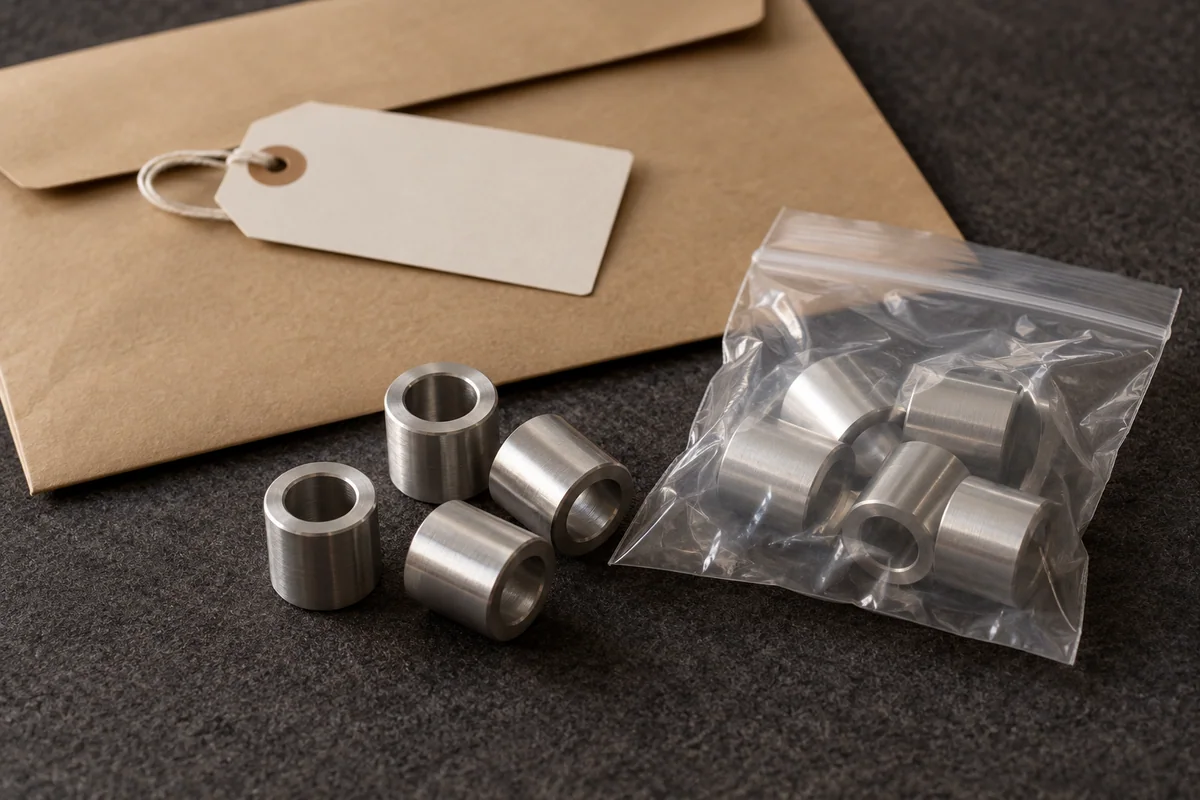
A material report naming the requested grade can still leave the delivered parts unidentified. The receiving question is whether a documented chain connects the report’s material to the actual units or lot received. Until that link is supported, the document may describe material somewhere in the supplier’s business rather than the parts on this order.
Create a document-to-lot chain with a separate entry for each connection. Keep the issuer and report reference, stated material identifiers, supplier processing records, dispatch mapping and observed receiving identifiers together. This is evidence organization for passive parts, not a way to infer composition from appearance or select an engineering material.
Begin with the agreed evidence requirement
Find the order’s material requirement and the evidence it calls for. Preserve the full designation, condition, product form and source specification where the approved documents specify them. Record which deliverable was agreed and what connection to the supplied goods it was supposed to establish.
Do not assume that every order requires a mill certificate, a particular certificate type or an independent laboratory report. The relevant requirement depends on the purchase and application. If the order leaves evidence scope unresolved, ask the responsible owner to define the next review instead of declaring that any available PDF must be sufficient.
Identify the received scope separately: part reference and revision, receipt event, observed supplier lot or package code, quantity basis and evidence location. Keep exact markings beside any normalized transcription. A warehouse tracking number can locate a bag without identifying its material source.
Keep three questions separate
First, authenticity: is the document genuinely attributable to the stated issuer? Second, applicability: does it connect to the material and parts actually supplied? Third, technical sufficiency: does its content answer the agreed material requirement for this application? A positive answer to one does not complete the other two.
This article concentrates on applicability. Keep any issuer-verification result and technical assessment as separate references rather than repeating a generic certificate-checking exercise. Use appropriate official channels for verification when needed, and obtain permission before sharing confidential supplier or buyer records beyond the authorized review.
Also distinguish material history from measurement traceability. NIST explains that the word traceability can refer to different concepts, including material or document history, while metrological traceability concerns measurement results and their reference chain. A calibration statement does not, by itself, identify the production lot of a received spacer. NIST traceability policy, in-text reference 3
Map the connections instead of matching one word
Read the source document’s identifier fields as stated. A heat number, batch number, sample identifier and report number can serve different purposes. Ask the issuer or responsible supplier to explain an ambiguous field; do not rename it “lot” simply to match the receiving spreadsheet.
Then follow the supplier’s records through any relevant processing or repacking. The source material may have been cut into blanks, machined into parts, sent for a separately specified finish and packed under another code. The receiving administrator needs the records connecting those identifiers, not instructions for performing those operations.
EPCIS 2.0’s TransformationEvent represents connections between identified inputs and outputs. This supplies a traceability-data example, without requiring GS1 adoption or establishing material provenance. GS1 EPCIS, section 7.4.5, printed page 93
The buyer’s simpler chain can use the supplier’s existing controlled references. Ask for an attributable cross-reference and supporting records at the point where identifiers change. A salesperson’s unexplained “same batch” message leaves that connection unresolved.
| Chain stage | Record to connect | What a missing link leaves unanswered |
|---|---|---|
| Material document | Issuer, document ID, relevant scope and stated source lot or heat | Which material does the report describe? |
| Supplier material receipt | Supplier intake record linked to the source identifier | Did this source enter the relevant supply chain? |
| Processing record | Job or transformation reference connecting inputs and output lot | Which source materials relate to the finished parts? |
| Additional specified process | Applicable process lot and its link to the parts, where required | Does separate evidence cover the required finish or treatment? |
| Packing and dispatch | Output lot mapped to shipped package or part identifiers | Which identified outputs were supplied on the order? |
| Receiving evidence | Actual observed identifier and linked receipt record | Can the delivered goods be connected to that dispatch? |
| Review outcome | Supported links, unresolved breaks and assigned owner | What can the evidence legitimately support? |
This is an editorial request structure. It does not certify a supplier’s records or impose every listed document on every purchase.
Preserve splits, combinations and intermediate codes
One source-material lot can lead to several production lots. Several inputs may also contribute to a finished lot. Record the relationship the evidence actually supports. Do not force a many-to-many history into a neat one-source-per-bag story merely because the register has one field.
If a production record names two material sources, retain both and ask the qualified owner whether the evidence covers the requirement. If only part of an output lot was dispatched to the buyer, the packing connection should identify that supplied subset. Keep the remainder outside the claim rather than implying that the buyer received the entire production run.
Dates and quantities can help check coherence, but do not supply a missing identity link on their own. A report issued near the production date or a raw-material weight resembling the order weight is not proof of allocation. Ask for the actual connection and leave unsupported arithmetic or chronology conclusions out of the material status.
A hypothetical heat-to-bag gap
Assume a fictional order of non-safety-critical passive spacers. Material document MD-15 names heat H-07. The received sealed bag shows supplier code PK-22, which the receipt record accurately preserves. No record initially connects H-07 to PK-22. Every identifier and event in this example is invented, and no actual material document has been authenticated or technically approved.
A matching grade name on the order and MD-15 does not close the gap. The chain status is “document supplied; connection to received bag unresolved.” The next request is specific: ask the supplier for the records linking H-07 through the relevant production reference to the lot packed as PK-22.
Suppose the supplier then provides job J-18 linking H-07 to output lot L-09, plus a dispatch record connecting L-09 to PK-22 on this order. That supplies the missing relationships for review. It does not automatically prove that the underlying entries are accurate or that MD-15 answers every technical requirement.
The reviewer should record which links were checked and any limits. If J-18 instead names H-08, retain the contradiction and ask for a supported explanation. Do not correct H-08 to H-07 in the buyer’s copy or attach a convenient report from another job.
Send the right unresolved question to its owner
The supplier can provide traceability records and explanations of its codes. The document issuer can address document-specific questions through its verification process. The responsible qualified reviewer decides whether the evidence is technically adequate for the stated requirement. The buyer’s receiving record should identify each role without treating correspondence forwarding as technical approval.
Appearance cannot establish alloy, temper, chemistry or compliance. Do not use color, a familiar surface or an improvised test to fill a broken document chain. This method also cannot be extended to infer internal battery composition or safety from exterior photographs. Battery, electrical and safety-critical requirements need their appropriate specialist review.
Close the applicability review with a bounded result: which received population is connected to which evidence, which links support that conclusion and which remain unresolved. Material acceptance, overall receipt release, transport and installation decisions must retain their own prerequisites. A good chain makes an evidence gap easy to locate; it never turns an unconnected document into a material pass.
Frequently asked questions
Does a matching material grade mean the report covers my parts?
No. The grade describes a requirement or reported material. You still need a documented connection from that evidence to the actual received lot or units.
What if the bag code differs from the heat number?
Different code roles can be legitimate. Ask for the supplier records connecting them through the relevant processing and dispatch history; do not assume they are aliases.
Does a complete document chain establish material conformity?
It supports an applicability review within its stated limits. Authenticity, accuracy and technical sufficiency remain separate questions for the appropriate reviewers.
Must every supplier provide a specific certificate type?
No universal obligation is claimed here. Use the actual order and application requirements, and resolve missing evidence scope with the responsible owner.
Sources
Discuss a sourcing request related to this article.Connect a Material Document to the Parts Actually Received