
Specify Which Finished Surfaces Must Not Touch in a Pack
Map protected faces and neighboring contacts before approving a separator, with material evidence and protection decisions kept explicit.
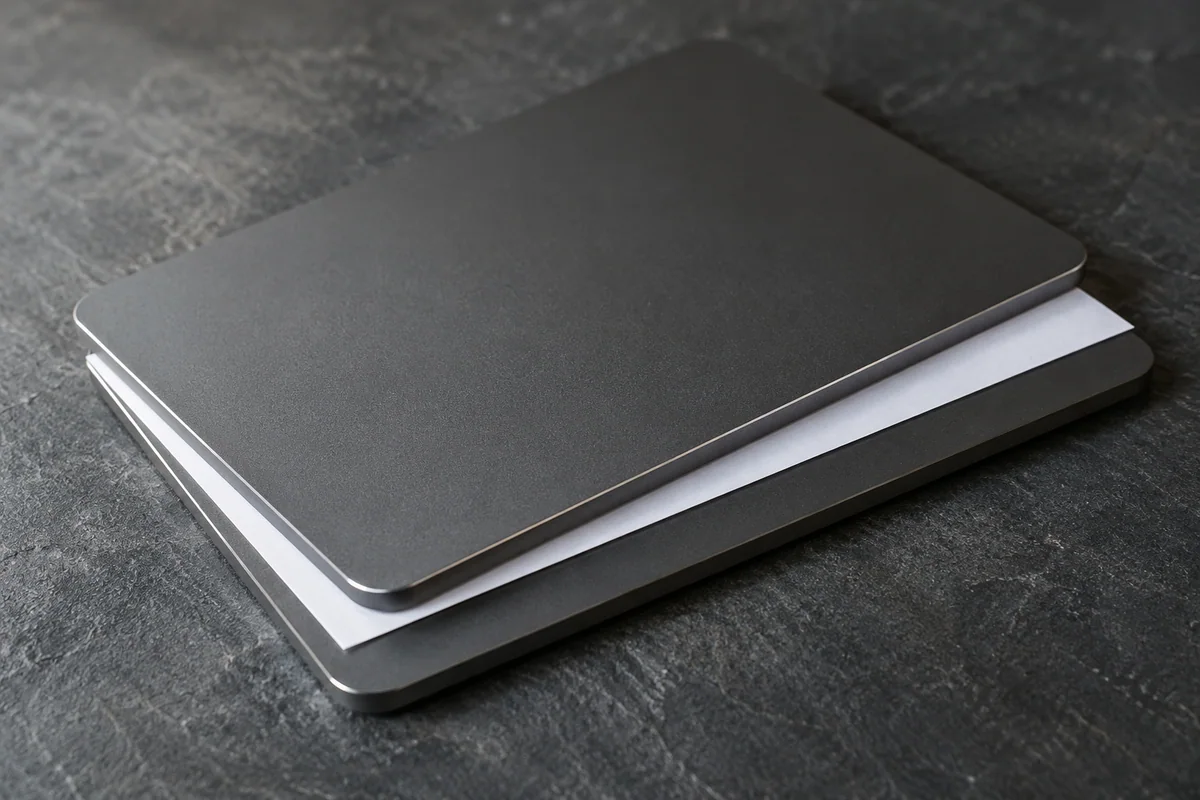
Mark the finished surfaces the buyer wants protected, then describe which contacts the proposed package must avoid or control. “Protect the finish” is too broad when a pack contains several faces, edges, pouches and separators. A packaging designer needs to know the protected locations and the contact conditions the buyer is asking it to address.
Use a contact-risk map that connects each surface to its possible neighbor, proposed separation approach, evidence gap and decision owner. This is a planning method for passive finished parts. Actual drawings, surface specifications, packaging-material data and validation records have not been supplied, so no separator is approved here.
Locate the protected surfaces on an authorized reference
Start from the exact part and finish revision. Ask the product owner to identify the covered faces, edges, openings and any areas that may accept an agreed contact. Use the terminology of the approved drawing or surface specification. A buyer’s annotated image can help locate a question, but should not replace a missing technical requirement.
Distinguish a protected cosmetic face from a permitted support region only when the authorized owner has made that distinction. Do not assume that a concealed surface can carry packaging contact, or that an apparently robust edge is an acceptable support. Missing contact permission remains a design question.
Preserve the basis for appearance acceptance. If the buyer already has an approved finish reference or cosmetic criterion, link it to the map. If no criterion exists, identify who will supply one. This article does not invent scratch limits, identify a coating from its color or diagnose an existing finish defect.
Describe contact pairs, not only individual parts
For each protected area, list what could be adjacent to it in the proposed arrangement. Consider another product face, a neighboring edge, a fastener pouch, the package wall, an insert or a closure. Describe the configuration in which the contact is being considered rather than asserting that damage will occur.
Ask the packaging owner to consider the planned stages that matter to the project: placing parts, closing the pack, the intended handling and distribution conditions, and recipient removal. The contact map records questions across those stages; it does not prescribe a test or establish what forces will arise.
Include contacts introduced by the protection itself. A separator proposed between two faceplates has its own contact surfaces and edges. A retaining feature may also touch a region that the buyer wanted untouched. The useful question is therefore which exact interface is acceptable under which approved conditions, rather than whether a material is generically described as soft.
Create a contact-risk map
Use stable surface references that can be located in the drawing or annotated layout. When a proposal changes orientation, update the contact pairs as well as the picture. An unchanged parts list can conceal a substantially different contact arrangement.
| Map entry | Information to record | Approval still needed |
|---|---|---|
| Protected region | Part, finish revision and identified surface | Product owner’s coverage and criterion |
| Contact pair | Region and neighboring part or packing feature | Whether that contact is prohibited, permitted or unresolved |
| Relevant condition | Packing, closed arrangement, intended handling or removal | Applicable conditions from the responsible owner |
| Proposed separation | Identified location and packaging design reference | Design review; no automatic protection claim |
| Contact material | Exact supplier, material code and revision when available | Evidence for the actual surface and conditions |
| Retention and movement question | What keeps the intended separation in place | Packaging owner’s assessment and validation scope |
| Evidence and outcome | Document or report, configuration and bounded decision | Named approval owner and unresolved limitations |
Keep “contact prohibited” distinct from “contact not yet reviewed.” The former is an input to the designer; the latter asks for a decision. Treating every blank cell as permission removes precisely the uncertainty the map is meant to expose.
Request material evidence for the actual interface
Ask for the proposed material’s exact identity and the evidence relevant to its intended contact with the specified surface. A family name such as foam, film or paper does not identify every product supplied under that description. Record supplier data and any limitations rather than translating a broad marketing statement into an approval.
Have the responsible reviewer connect that evidence to the finish, contact duration and environmental conditions the project has actually specified. Where those conditions are unknown, leave the compatibility question open. A material datasheet and a report about a different surface are separate pieces of information; neither should silently stand for a review of this interface.
Do not infer corrosion protection, ESD properties, residue-free removal, recycling suitability or other performance from appearance. If one of those properties is required, request applicable evidence under a separately defined scope. No adhesive application, cleaning procedure or removal technique is prescribed here.
Compare two fictional faceplate arrangements
Assume two fictional finished faceplates, A and B, have buyer-designated display faces A-D and B-D. The owner has prohibited direct contact between those display faces. A proposed layout places them together with an unspecified white interleaf. This describes an invented planning question, not a real packed product or a successful protection result.
The interleaf proposal addresses the named face-to-face separation in the drawing, but its material identity remains unknown. The layout also leaves A’s edge beside B-D. The map therefore has at least two distinct rows: display-face separation awaiting material review, and edge-to-display-face contact awaiting a design response. Closing the first row would not close the second.
A revised proposal puts the two plates in separate pockets. That can be reviewed as a different layout, but it is not automatically accepted. Ask which pocket surfaces touch A-D and B-D, how the parts are intended to remain in position and what evidence supports the defined protection objective. The decision is to advance the better-described proposal for its named review, not to declare either design scratch-proof.
Separate layout agreement from protection evidence
ISTA’s public guidance links test selection to the intended decision and distribution environment, and calls for representative product and package samples. Its procedure overview distinguishes screening and simulation purposes. Those principles support asking a qualified owner what evidence is needed; they do not select a protocol or validate this contact map. ISTA design and testing guidance and procedure overview
A photograph or mockup can help reviewers locate the proposed interfaces. It cannot by itself establish material compatibility or protection throughout the intended conditions. Record exactly what the review establishes: identified surfaces, agreed layout features, accepted material evidence or a specifically scoped performance decision.
Close the planning handover when each relevant contact has an approved treatment or a visible unresolved question with an owner. Retain the exact product, finish, material and layout revisions so a later change can reopen the affected interfaces. The map makes the protection request precise without turning an attractive arrangement into an unsupported performance guarantee.
Frequently asked questions
Which surfaces should the contact map protect?
Use the exact locations and criteria identified by the authorized product owner. Do not assume that concealed faces or edges are permitted supports when their contact status has not been reviewed.
Does a separator prove that a finish will remain undamaged?
No. Its presence can describe a proposed layout. Material suitability, retention and protection under the intended conditions remain separately scoped questions requiring appropriate evidence.
Can generic foam or paper descriptions establish compatibility?
No exact material or surface compatibility is established by those family names. Request the proposed material identity and relevant evidence for the actual finish and specified conditions.
Does this article provide an ISTA test or a scratch acceptance limit?
No. The cited public guidance supplies context about test objectives and representative configurations. A qualified owner must determine applicable evaluation and criteria; no full procedure was acquired or applied.
Sources
Discuss a sourcing request related to this article.Specify Which Finished Surfaces Must Not Touch in a Pack