
Record Battery Model, Serial and Lot Labels Without Inferring Authenticity
Record observed battery model, serial and lot labels by received unit, with image links and unresolved readings kept separate from authenticity approval.
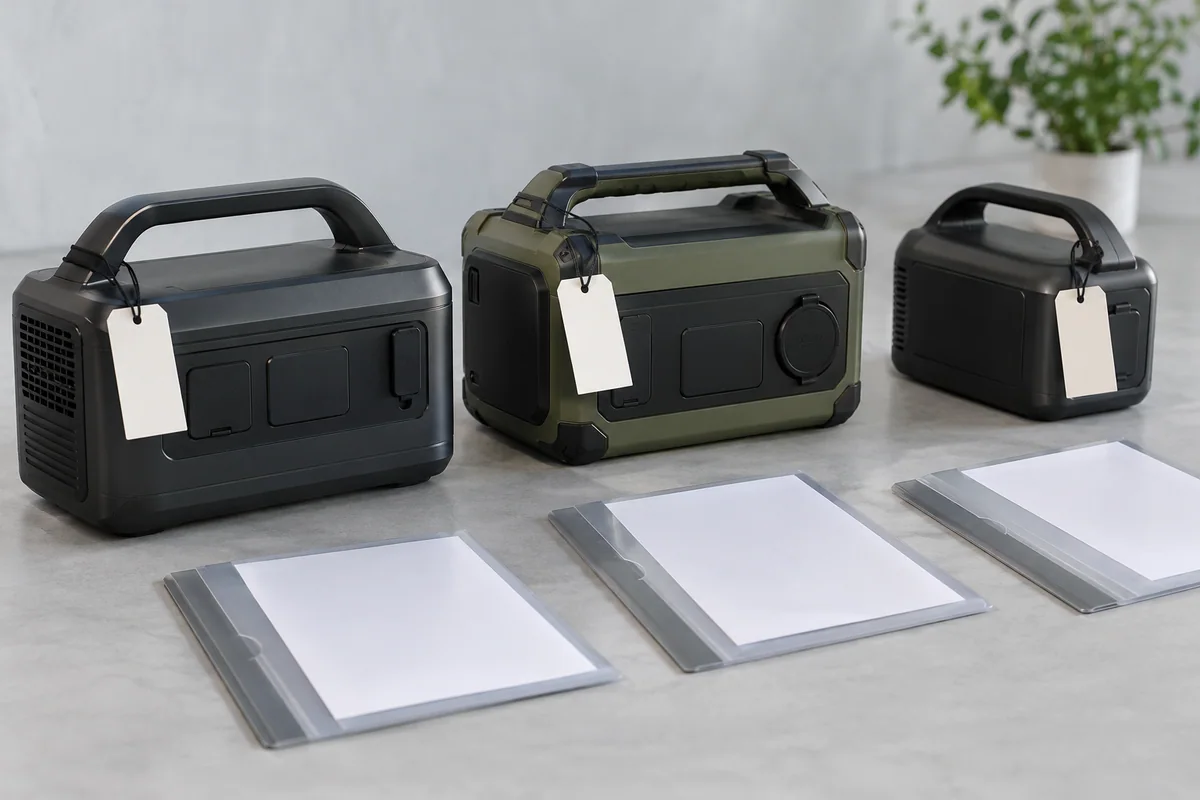
Record the identifiers actually visible on each received battery product, preserving the original text and the evidence that connects it to that unit. Keep model, serial, lot, seller stock code and carton reference in separate fields. A readable label supports an observation of what the label says; it does not authenticate the product or clear it for use.
The practical output is a unit-to-label register. It allows a supplier, manufacturer or qualified reviewer to investigate a mismatch without asking which unit a photograph showed. No actual battery, receiving photograph or manufacturer identification scheme was supplied for this article. The examples are fictional, and the register does not establish authenticity, internal safety or compliance.
Define the role before interpreting the number
Start with the manufacturer’s own explanation of the labels used on the exact product. The model or type designation usually describes the product identity to which specifications refer. A serial field is intended to distinguish an individual item within the manufacturer’s defined scheme. A lot or batch field groups items according to that scheme. Preserve any revision or variant fields separately when present.
These are roles to confirm, not meanings to assign from the length of a code. A six-digit string might be a production reference, a seller SKU or part of a serial. A date-like string should not become a manufacturing date merely because it resembles a calendar format. Mark an unexplained code as “role unconfirmed” and retain where it appears.
GS1 provides one bounded example of these distinctions. Its System Architecture identifies a trade-item class by GTIN, a batch or lot by GTIN plus batch/lot number, and an individual trade item by GTIN plus serial number. The document also warns that embedded business significance can be internal to an organization. These concepts explain why code context matters; they do not establish that a received battery uses GS1 or decode a manufacturer’s private labels. GS1 System Architecture, section 4 and Table 4-1
Give the observed unit a stable receiving reference
Use a local unit reference connected to the receipt event and order line. Keep that reference even if the manufacturer’s serial is unreadable or later corrected in the transcription. Otherwise the item most in need of clarification can disappear from the register because its expected identifier is missing.
Record the label’s location and the object carrying it: outer carton, product exterior, accessory pouch or accompanying document. A carton label is not automatically a direct observation of the product label inside. If the authorized receiving scope does not expose that product label safely, say which label was observed and leave the product-label field unverified.
Use only evidence obtainable within the approved safe receiving scope. Do not ask staff to open a battery enclosure, remove protective covers, energize the product or handle a suspect unit to complete a serial field. An inaccessible label is a documented limitation for the appropriate owner to resolve.
Capture text without silently cleaning it up
Transcribe the visible characters faithfully, including leading zeros, suffixes, punctuation and meaningful spacing. Keep an original-language field alongside any explanatory translation. If a spreadsheet would turn a long code into scientific notation or drop leading zeros, preserve it as text and compare the stored value with the original image.
Treat optical character recognition as a draft transcription. Check it against the image; similar characters such as O and 0 can produce a plausible but incorrect match. Where the character cannot be read, state the uncertainty outside the raw transcription field. Do not complete it from the supplier’s expected list and then call the result observed.
Retain barcode-decoded data separately from the human-readable label text if both are available. Record which source supplied each value. A disagreement is an issue to investigate, not an invitation to choose whichever version matches the order. A barcode or QR destination also should not be treated as an independent authenticity decision simply because it opens successfully.
Use a unit-to-label evidence register
Keep one unit record with linked rows for each observed label. This supports multiple labels without accidentally counting the same product as several units.
| Register field | Record precisely | Limitation to retain |
|---|---|---|
| Local unit and receipt | Stable unit ID, arrival ID and order line | Order attribution may itself be provisional |
| Label location | Object and exterior face carrying the label | Carton evidence may not expose product label |
| Field name as printed | Model, S/N, lot or original wording | Code role may need manufacturer explanation |
| Verbatim value | Exact visible text | Unreadable characters stay unresolved |
| Evidence reference | Original image ID and relevant view | Cropped image may lack unit context |
| Document comparison | Exact packing/document reference and stated identifier | Matching text does not authenticate either source |
| Review outcome | Matched transcription, mismatch, unreadable or unobserved | Identity, safety and technical approval stay separate |
| Clarification trail | Question, responding party, date and evidence | A new statement does not rewrite old observation |
Record the observation date and the person or provider supplying it. Preserve original photos and corrections to the transcription. The register should distinguish an improved reading of the same label from evidence of a physically different label.
A fictional three-unit register
Assume three closed battery products have local receiving references U-01, U-02 and U-03. Their existing safe exterior records show the same fictional model M-7. U-01 shows serial EX-S01 and lot EX-L04; U-02 shows serial EX-S02 and the same lot EX-L04. On U-03, the serial field is unreadable in the supplied photograph. All identifiers and observations in this example are invented.
U-01 and U-02 can have separate serial observations and a shared lot observation without a contradiction. The lot field groups them; the serial field distinguishes them under the example’s assumed scheme. This says nothing about whether either unit is genuine or whether the manufacturer recognizes the codes.
U-03 remains an identified local unit with an unresolved serial reading. Do not copy EX-S03 from a packing list into its observed field simply because the supplier lists three consecutive serials. Put EX-S03 in the document-declared field and ask whether further safe evidence or manufacturer clarification can connect it to U-03.
If an appropriate later image makes the label readable, add the new evidence reference and the corrected observation. Retain the original unreadable state in the history. A clearer photograph closes a reading gap only; it does not supply the separate evidence needed for product authenticity or approval.
Investigate repeated serial observations without guessing the cause
First establish whether the images show two physical units or the same unit twice. Compare the local receipt and unit references, image context and provider explanation. A duplicated filename, repeated photo or transcription error can create an apparent duplicate in the register.
If the same apparent serial remains on two distinct units, flag the exact pair and request clarification through the known supplier or manufacturer’s official support route. Include the observed model, label location, relevant evidence and original order reference where appropriate. Ask how the identifier is intended to work and which records would explain the observation.
Do not label the goods counterfeit from that observation alone. Likewise, do not accept a seller’s “normal” response as a complete explanation if a unique-unit identity was required. Record the response, its scope and what remains unsupported. Share confidential order records only within the authorized review.
Keep documentary agreement separate from identity approval
A packing list and a product label can contain identical text. Record that comparison narrowly: the observed value matches the listed value. It does not establish who applied the label, the provenance of the product or whether the accompanying document covers its actual internal configuration.
If the model or revision differs from the accepted order, retain both values and refer the difference for the required decision. Do not rename the received product to match an earlier quotation. If the supplier provides an alias explanation, attach it without deleting the label as observed.
Close the receiving register when every in-scope unit has an attributable observation or an explicit limitation, and the remaining identity questions have a responsible owner. Pass the record to the people reviewing provenance, technical requirements and any release conditions. A well-kept label register makes those reviews possible without pretending to perform them.
Frequently asked questions
Can two battery units legitimately show the same lot number?
A lot identifier can group multiple units under the manufacturer’s scheme. Confirm that scheme and preserve individual unit references; a shared lot alone is not a duplicate-serial finding.
Does a readable serial number prove authenticity?
No. It records what is visible. Provenance, identifier validity, document applicability and technical approval require separate evidence and review.
What should replace an unreadable serial in the register?
Use the stable local unit reference and mark the serial reading unresolved. Keep any supplier-declared value in its own field rather than presenting it as observed.
What if two photos appear to show the same serial?
First establish whether they depict two distinct units or repeated evidence of one unit. Preserve the observations and request an attributable explanation before drawing an authenticity conclusion.
Sources
Discuss a sourcing request related to this article.Record Battery Model, Serial and Lot Labels Without Inferring Authenticity