
Separate Presentation Packaging from Transport Protection
Give presentation and transport layers separate owners, evidence and approvals so an attractive kit tray never inherits an unsupported protection claim.
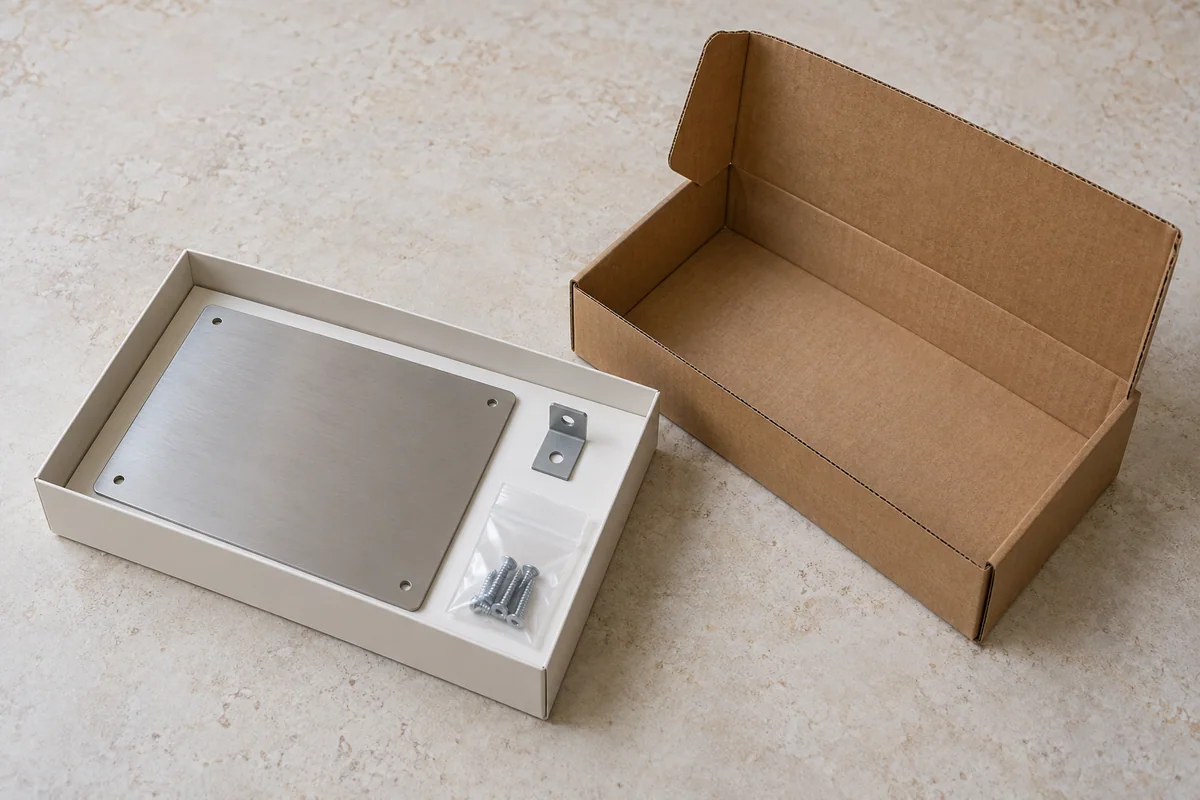
An attractive tray can settle how a passive DIY kit should look when opened while leaving its transport protection undecided. Give each packaging layer a defined job, an accountable owner and an approval boundary. The buyer should be able to approve the presentation without accidentally authorizing an unverified transport configuration.
Start with a package-layer responsibility matrix. It connects the visible arrangement to the separately agreed protection work and makes dependencies explicit. The method below is for planning around ordinary passive parts and empty enclosures. It includes no actual supplier commitment, proven packaging performance or battery packing instructions.
Describe functions before naming boxes
Give the arrangement a configuration reference and identify its components in ordinary language: component-contact separator, presentation tray, presentation cover and proposed outer transport enclosure, for example. Use the real project’s names once approved. Avoid using “box” for every layer because that makes a statement such as “box approved” difficult to interpret.
For each component, ask what decision it serves. A cover might carry the agreed visual presentation. A tray might locate components for opening. An interleaf might separate a specified finished surface from another object. A transport layer might be part of a broader protection design. One component can serve several purposes, but those purposes still need their own requirements and evidence.
Do not force a design into a rule that presentation packaging can never contribute to protection. Instead, make any proposed contribution explicit and subject to appropriate review. Similarly, an undecorated outer enclosure is not proven protective just because its intended purpose is transport.
Keep presentation criteria observable
Ask the buyer’s presentation owner to name what can be judged from the supplied reference. Examples include the approved part arrangement, which surface faces the recipient, the insert’s location and whether opening reveals the intended kit grouping. Use an approved layout, artwork revision or identified reference rather than a vague request for a “premium feel.”
Record how the reference is being reviewed. A photograph can show a visible arrangement at one moment; it cannot establish every concealed contact or the recipient’s physical access. If access matters, agree how a representative mockup will be reviewed and what that review is allowed to conclude. Do not invent opening-force limits or substitute a photo for missing evidence.
Keep appearance choices separate from changes to protected surfaces or contact materials. If the presentation owner wants a tighter-looking fit, ask the packaging owner to assess the proposed change. The visual preference should remain a request until the affected requirements have been reconciled.
Use the layer responsibility matrix
The following is a planning template. Populate it with actual references and named roles; none of the entries establishes that a provider offers the work.
| Layer or interface | Intended function | Requirement owner | Evidence needed | Approval boundary |
|---|---|---|---|---|
| Parts within presentation tray | Agreed grouping and visible orientation | Buyer kit/presentation owner | Approved contents map and identified mockup | Arrangement only, within represented features |
| Part-to-insert contact | Respect protected surfaces and permitted contact | Product and packaging owners | Exact contact specification and applicable material evidence | Only the identified surface/material pairing |
| Cover and instruction position | Present approved information at the intended opening stage | Artwork/instruction owner | Approved files and placement reference | File identity and demonstrated placement |
| Presentation pack within outer enclosure | Define how the layers relate | Packaging owner | Complete proposed arrangement and unresolved interfaces | No protection conclusion from appearance alone |
| Complete transport configuration | Meet agreed transport-protection objectives | Qualified packaging owner | Agreed validation scope and traceable results | Exact configuration and evidence-supported scope |
A row can remain open while another is approved. Keep a visible overall status for the complete configuration so several completed presentation rows are not mistaken for permission to dispatch goods.
Assign transport questions to their own decision
Ask the responsible packaging owner what distribution conditions the design must address, which product vulnerabilities matter and what information is missing. The buyer supplies the intended use and delivery context; the qualified owner determines what design and verification work is appropriate. This article does not select a test or provide test parameters.
ISTA’s public procedure page distinguishes screening purposes from distribution simulation. Its design guidance links packaging decisions to product vulnerabilities and the distribution environment. Those distinctions support a separate transport decision; they do not approve this kit’s packaging. ISTA test procedure scope and design guidance
Where validation is proposed, request the configuration it will cover, the decision it will inform, the responsible reviewer and the acceptance criteria agreed for that work. A generic report or a report for another packed product does not answer those project-specific questions by itself. Record missing reports as missing rather than treating a supplier’s confidence as the evidence.
A hypothetical tray approval with an open outer layer
Consider a fictional passive organizer kit containing an empty shell, a detached cover and a sealed hardware pouch. The buyer reviews presentation mockup P-04 against layout L-02. The visible grouping and instruction position meet the stated presentation brief. The mockup has no final outer transport design, and no applicable protection report is supplied.
The decision can therefore say: “P-04 accepted for the demonstrated grouping and instruction position under L-02. Material-contact evidence and complete transport configuration remain open. No dispatch authorization is created by this review.” This records a useful outcome without withholding every presentation decision until all other work finishes.
Now suppose the proposed outer enclosure requires turning the tray through a different orientation. The presentation owner should identify which earlier observations still apply; the packaging owner should assess the relevant protection implications. The earlier approval is a reference to consult, not a reason to skip the changed interface.
If the buyer later chooses a different presentation cover, record the new cover and ask the responsible owners which requirements it affects. A visual change may have limited consequences or broader ones; neither answer should be assumed without the actual configuration.
Close the interfaces before calling the package complete
Review the matrix across layers, not just down its individual rows. Does the final outer arrangement use the approved tray? Are the contact materials the ones supported by the supplied evidence? Can the approved insert still occupy its intended position? Are temporary mockup substitutes identified and removed from the final issue where required?
Ask each owner to acknowledge the exact scope they control. Then have the authorized coordinator identify any unresolved dependency preventing the complete configuration from moving to its next agreed stage. Keep freight rates, dimensional billing and carrier acceptance outside this presentation/protection matrix.
The final record should show which appearance decisions are settled, which protective functions have evidence, and who owns the remaining questions. That makes the presentation approval valuable while preserving the work still needed for transport protection.
Frequently asked questions
Can presentation packaging also provide protection?
It can have a proposed protective role, but that role needs explicit requirements and applicable evidence. Do not infer protection from its appearance or from approval of the visible layout.
Does a plain outer box establish transport protection?
No. Identify the complete arrangement and the qualified owner responsible for its design and evidence. A transport purpose alone is not a performance result.
Can the buyer approve a tray before transport work is finished?
Yes, for clearly stated represented features. Record open dependencies and ensure the limited decision cannot be mistaken for complete packaging or dispatch approval.
Who should decide which transport test applies?
The responsible qualified packaging owner or test provider should determine the applicable scope from the actual product and distribution requirements. This article does not select a protocol or supply test parameters.
Sources
Discuss a sourcing request related to this article.Separate Presentation Packaging from Transport Protection