
A DIY Kit with Missing Parts: Budget the Replacement Shipment
Compare the full cost of replacing missing kit parts, including freight, destination charges, compatibility review, and supplier reimbursement.
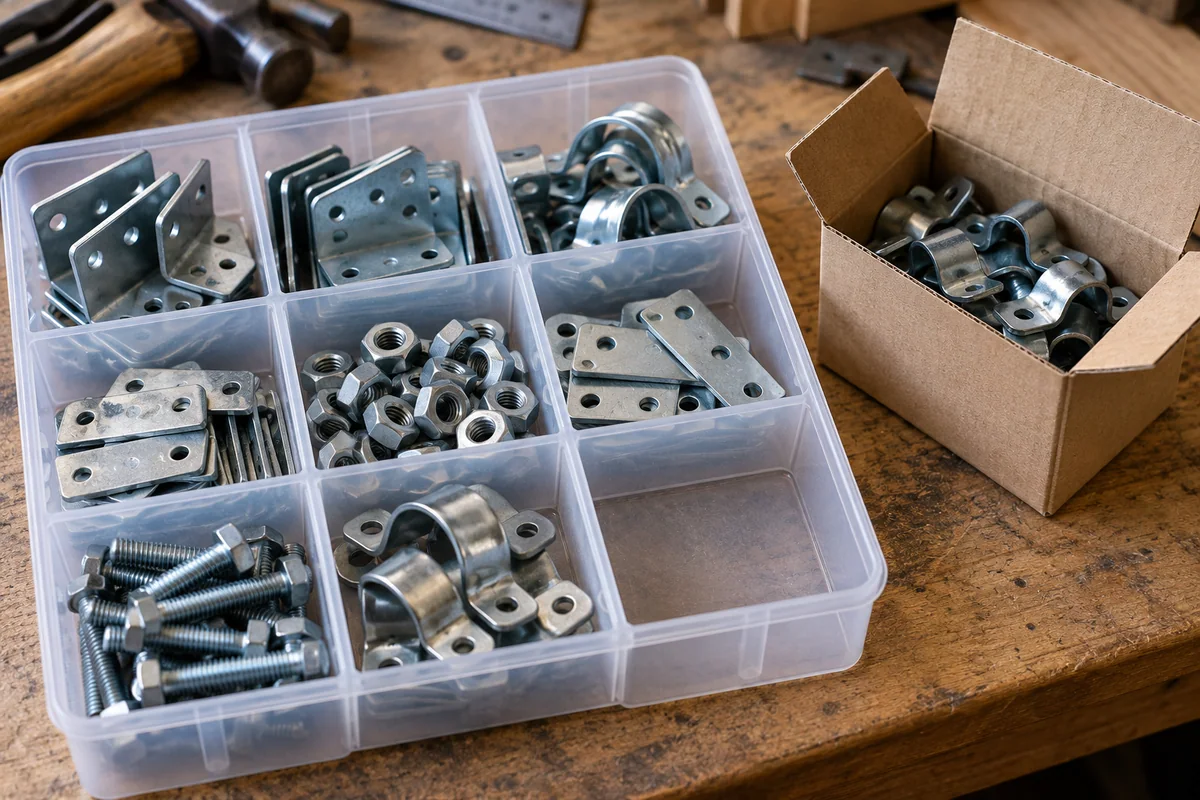
A supplier offers to replace a missing part for free. Before accepting, ask what it will cost to get the correct part to you and restore the kit to its agreed condition. A zero-priced component can still require paid packing, transport, clearance, and a second receiving check.
The useful decision is not “free part or refund?” It is which documented remedy restores the intended purchase at an acceptable total cost and with an appropriate technical review. For a battery or electrical kit, do not improvise a substitute or begin assembly to compensate for missing components.
Establish the shortage before pricing the remedy
Compare the purchase order’s bill of materials or included-parts schedule with the packing list and receiving record. Identify the missing item by part reference, specification, revision, and quantity. Distinguish “not found in the expected carton” from “confirmed not received” by checking the recorded package count and whether the order was split into multiple shipments.
The U.S. International Trade Administration describes a packing list as a record connecting package contents, measurements and weights. That makes it a useful reconciliation input, although the article is U.S. export guidance rather than a universal template requirement. ITA packing-list guidance
Record what evidence exists: carton identifiers, delivery records, photographs taken during receiving, supplier packing records, and the agreed contents. Ask the supplier to reconcile the same part numbers rather than replying that “all accessories were included.” A difference in wording may be a specification dispute rather than a physical shortage.
Preserve relevant evidence and follow the applicable claim or notice process. Do not assume every contract or carrier uses the same deadline. If a missing safety-related component is discovered, stop dependent work and obtain qualified guidance rather than treating the omission as a minor inconvenience.
Separate responsibility from the practical solution
Ask the supplier to state what it accepts: the shortage, the replacement specification, the quantity, and which costs it will cover. Replacement parts, international freight, destination charges, and local handling are different commitments. “We will send it” leaves too many of those questions unanswered.
Keep a disputed responsibility question separate from the buyer’s operational choice. You may need a workable remedy while discussing who ultimately pays, but do not book an expense on the assumption it will be reimbursed. Obtain approval for the proposed cost and record any unresolved amount.
If a sourcing agent or consolidation warehouse is involved, request its receiving and dispatch records. This is a way to locate the discrepancy, not a reason to assume that a particular party caused it. Keep the original and replacement shipment records linked so that the second shipment does not look like an unrelated purchase later.
Compare four possible remedies
A dedicated replacement shipment can make sense when the missing item is essential and waiting is costly. Request a real packing and transport quote, not a guess based on the part’s net weight. Identify the delivery scope and any charges payable on arrival. Ask the supplier to confirm that the replacement has been checked against the agreed specification before release.
Replacement with the next planned order may avoid a separate movement, but only if that order is real and its timing is acceptable. Ask whether adding the parts changes the packing, freight basis, or shipment review. Do not compare a confirmed standalone price with an assumed zero-cost future shipment.
Local replacement is worth considering only where a competent person can verify suitability. A visually similar connector, fastener, protective device, or battery component is not automatically interchangeable. Obtain the necessary specification and approval before treating local availability as a valid option. No freight saving compensates for an unsafe or unsuitable substitution.
Credit or refund can be sensible when the remaining goods still have a legitimate use or when the parties agree another remedy. Evaluate what the incomplete kit is actually worth to your operation. A credit equal to the missing part’s purchase price may not cover the cost of making the kit usable, and a refund promise is not received cash.
Calculate restoration cost, not just postage
For each acceptable option, list replacement parts, checking or preparation, packing, transport, clearance and destination services, any nonrecoverable charges, and additional receiving work. Add a separately stated allowance for operational delay only if you have a defensible basis. Keep confirmed amounts, estimates, and possible reimbursements in separate columns.
Hypothetically, suppose the supplier provides a missing non-electrical bracket at no charge. A dedicated shipment is quoted at USD 42, with USD 8 preparation and USD 10 destination handling: USD 60 total. A compatible, approved local replacement is USD 35 plus USD 12 local delivery: USD 47. Consolidation with an already planned order has a confirmed incremental charge of USD 9 but arrives too late for the buyer’s stated need. These invented figures are not current prices; taxes, exchange fees and delay costs are excluded.
On those assumptions, local supply costs USD 13 less than immediate overseas replacement, but only if suitability is actually confirmed. Consolidation is cheapest in cash but fails the timing constraint. If the supplier explicitly agrees to pay the dedicated shipment’s full USD 60, the buyer’s out-of-pocket comparison changes; the underlying remedy cost does not vanish. Record that agreement rather than subtracting an uncertain claim.
Prepare the replacement as its own shipment
Ask the logistics provider and broker what documents and descriptions the replacement movement requires. A zero selling price does not justify concealing contents or inventing a customs value. The ITA explains that commercial invoices support customs clearance and duty or tax assessment, with destination-specific requirements to check. ITA commercial-invoice guidance
If the replacement contains a battery or other regulated item, have a qualified provider review that actual consignment. Do not assume acceptance of the original kit covers a separate replacement part. This article addresses procurement and costs; it does not give instructions for packing dangerous goods or assembling the kit.
Close the remedy only after the agreed item is received, identified, and checked through the appropriate process, and any agreed credit or reimbursement is resolved. For the next order, request a numbered contents list and a defined pre-dispatch completeness check. A sourcing request that includes the shortage record, exact replacement specification, destination and required decision date gives the team something concrete to resolve.
Frequently asked questions
Who should pay replacement shipping after a shortage?
Check the contract, agreed remedy and relevant rights with an appropriate adviser if disputed. Ask the supplier to confirm responsibility for each cost; do not assume a free part includes all transport and destination charges.
Can I simply replace the missing item with a similar local part?
Only after appropriate suitability review. Safety-related or electrical components can require exact specifications and qualified approval; appearance and dimensions alone do not establish equivalence.
Does a free replacement need shipping paperwork?
Ask the provider and broker about the actual movement. Describe the goods accurately and follow destination documentation and valuation requirements; no selling price is not permission to invent a zero customs value.
When is it reasonable to wait for the next shipment?
When that shipment is genuinely planned, the delay is acceptable, and the incremental packing, freight and review requirements are confirmed. Compare a documented option rather than assuming spare capacity is free.
Sources
Discuss a sourcing request related to this article.A DIY Kit with Missing Parts: Budget the Replacement Shipment