
Request a Bounded Alternative to a Specified Portable Power Product
Request a portable-power alternative with a clear baseline, disclosed changes, matching evidence and named approval owners before any substitution.
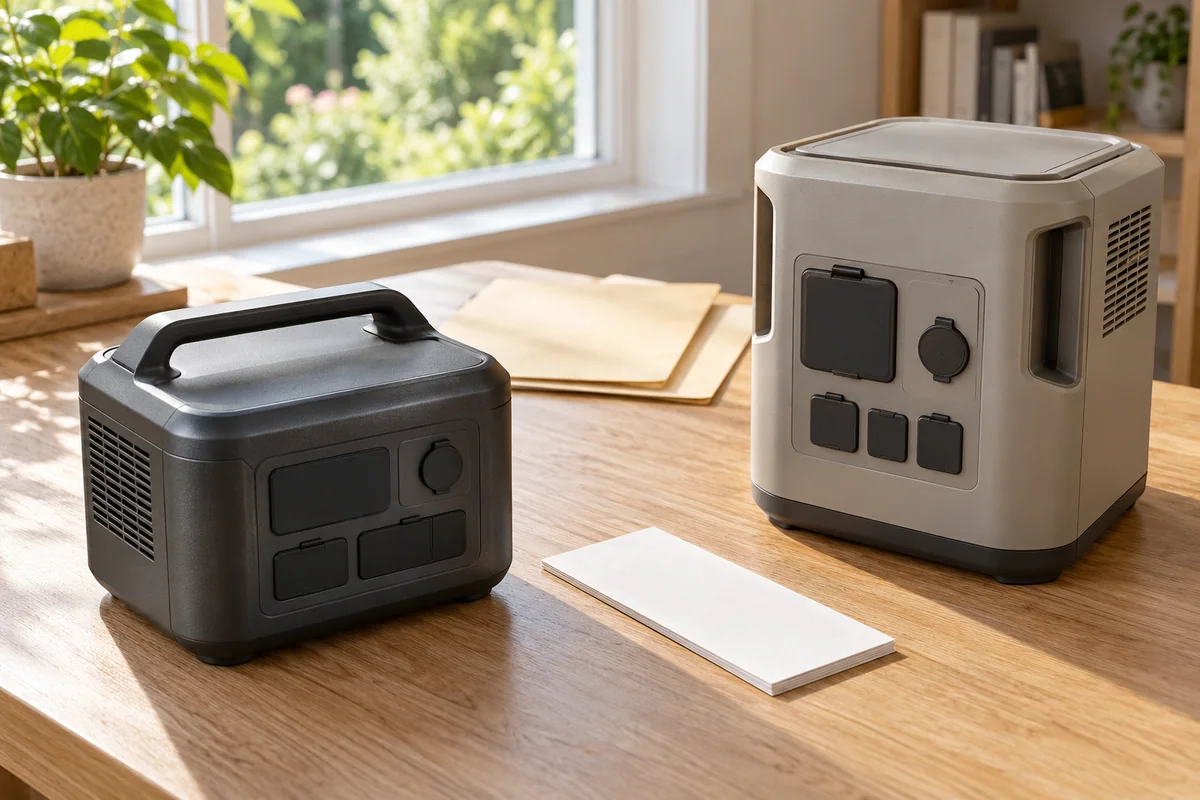
A request for a lower-cost portable power alternative should give the supplier permission to propose a change, with a clear boundary around what may change. Keep the specified product as the baseline until a named buyer approves a fully identified alternative. A seller’s description of “equivalent” leaves the important decision unfinished.
This approach suits an enclosed finished product with an existing requirement and a responsible technical reviewer. It does not help an unqualified buyer redesign a power system. The deliverable is a change register that explains the proposal and records who may accept it, rather than a ranked list of similar-looking products.
Set the boundaries before requesting alternatives
Identify the baseline manufacturer, exact model, regional version and relevant hardware or firmware revision where these affect the requirement. Attach the authorized specification and manufacturer documentation by filename, date and revision. Say whether the baseline itself is already approved or is only a reference candidate. An unapproved reference should not acquire approval merely because alternatives are measured against it.
Divide requirements into three groups:
- Fixed: attributes the supplier must preserve to remain within this RFQ
- Open to proposal: attributes that may differ if the supplier documents the change
- Unresolved: requirements the buyer’s qualified reviewer still needs to define
For example, a buyer might permit a different enclosure color while requiring a documented match to an approved interface. This permission is specific to that brief. It does not authorize changes to other functions, accessories or operating conditions. If a fixed requirement cannot be met, ask for a separate out-of-scope proposal rather than a quietly edited baseline quote.
State the commercial reason for considering alternatives, such as obtaining another documented offer. Avoid promising that a different model will save money. Savings require actual comparable quotations, including the work needed to review the changed product.
Make each proposed change traceable
Give the alternative its own reference, such as ALT-01, linked to the baseline item. Require the supplier to identify the manufacturer and model before supplying a price. A listing title, enclosure photograph or capacity headline is insufficient to identify the proposed configuration.
Use this buyer change register. The entries describe fields to complete, not validated requirements for a particular product.
| Field | Baseline record | Alternative response | Decision owner |
|---|---|---|---|
| Product identity | Manufacturer, model, variant and revision | Exact proposed identifiers; unexplained aliases flagged | Buyer and document reviewer |
| Required function | Approved operating requirement and source | Match, difference or evidence missing for each function | Qualified technical reviewer |
| Interfaces | Approved interface references and conditions | Changed interface, supported combinations and source pages | Responsible integrator or technical reviewer |
| Included items | Itemized accessory and documentation list | Supplied, optional or excluded for every item | Buyer, with technical review where needed |
| Evidence | Required document and configuration coverage | Matching source, reference, revision and remaining gaps | Assigned evidence reviewer |
| Commercial effect | Baseline quoted scope and validity | Separate changed charges, exclusions and validity | Purchasing owner |
| Disposition | Current approval state | Proposed, held, rejected or approved with limits | Named authorized approver |
For every changed row, request the relevant page or section, rather than another general brochure. A supplier can enter “evidence pending,” but should not enter “same” when it has not answered the requirement. Attach long explanations to the row so the main register remains readable.
Read limitations alongside feature names
A function name needs its documented operating limits. A bounded public-document example illustrates why: the EcoFlow DELTA 2 English user manual V1.0, in its EPS section on printed page 11, describes switching within 30 milliseconds and explicitly excludes zero-millisecond switching. That observation concerns this identified manual and its documented variant; it is neither a performance test nor evidence about another portable power product. EcoFlow DELTA 2 manual V1.0
For procurement, the lesson is to ask whether the proposed function meets the approved requirement under its stated conditions. Do not let a supplier replace a specific requirement with a broader feature label. If a different operating mode is offered to satisfy it, record that as a change for the responsible reviewer. Do not resolve the gap by opening the product, adapting its wiring or trying an improvised energized test.
Likewise, request documented interface support for the complete proposed combination. The purchasing team can collect part references and manufacturer statements. Acceptance of safety-critical compatibility belongs with the person qualified and authorized to make that decision.
Work through a bounded hypothetical proposal
Assume a fictional buyer’s approved brief requires finished Unit A, a documented interface I-1 and accessory C-1. The supplier proposes fictional Unit B as ALT-01. Its submitted documents describe interface I-2, and its quote excludes C-1. These names are invented placeholders. They represent no real product, connector, price or compatibility result.
The buyer records two differences: interface changed; required accessory excluded. ALT-01 stays on hold. The supplier is asked to provide the manufacturer evidence for the intended combination and a clear accessory proposal. The technical reviewer must decide whether the changed interface can be accepted. Purchasing must establish what the complete alternative actually includes.
If the reviewer rejects I-2, the proposal is unsuitable for this brief even if the supplier offers a discount. If a revised proposal is acceptable, retain the original record and issue ALT-01 revision B with the approved conditions. Do not overwrite the baseline item and lose the fact that a substitution occurred.
Keep review permission separate from order release
Use a short approval sequence: permit the proposal, review the evidence, approve or reject the identified changes, then authorize the resulting purchase scope. A request for documents or a sample belongs to the review stage. It should not be interpreted as authorization to supply the alternative in production.
Record the approver’s name, role, decision date, proposal revision and limits. Approval may cover one quantity or one application; state that boundary. Any later change to the accepted model, revision, accessory set or relevant conditions needs another recorded decision. Commercial approval alone should not close an unresolved technical row.
Hold the decision when the actual manufacturer is unknown, source documents conflict, essential limitations are missing, or no qualified person owns compatibility review. Also hold when the seller will not distinguish its alternative from the original offer. These are unresolved procurement conditions, not findings that every candidate is defective.
Send the supplier the baseline pack, the permitted-change list and the register together. Ask for an alternative that can be evaluated against those records. The useful outcome is a documented decision about a specific changed product, with every essential condition carried into the quote.
Frequently asked questions
Does asking for an alternative authorize the supplier to substitute it?
State that it does not. Give each proposal a separate reference and require explicit approval of its exact model, configuration and changes before order release.
Do matching power or energy figures establish interchangeability?
They answer only those stated rating questions. The responsible reviewer still needs the documented functions, conditions, interfaces and complete supplied scope.
Can a supplier approve its own compatibility claim?
The supplier should provide evidence and explain its claim. The buyer must assign acceptance to a qualified, authorized reviewer rather than allowing a sales assertion to close the decision.
What if the baseline product has not been approved?
Label it a reference candidate. Review the baseline and the alternative against the project requirement; a comparison cannot create approval for either product.
Sources
Discuss a sourcing request related to this article.Request a Bounded Alternative to a Specified Portable Power Product