
Ask for Receiving Photos That Answer a Specific Discrepancy
Request receiving photos by decision and unit, linking context to detail while preserving originals, missing views and limits on what images can prove.
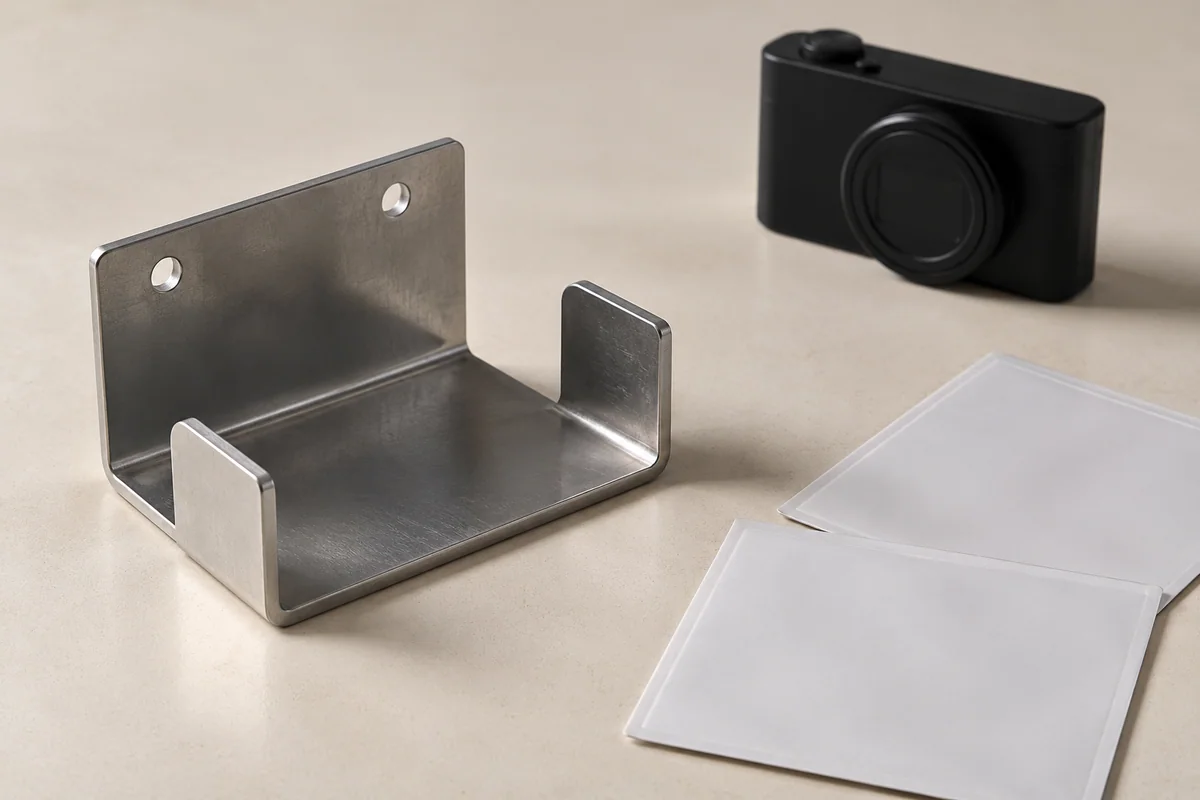
Ask for the photograph that resolves the missing observation, and identify the exact received item it must show. A sharp close-up of a scratch is still incomplete if nobody can connect it to the relevant unit. A wide view of twenty parcels cannot answer a question about one label’s revision. Start with the decision, then specify the missing view.
The useful deliverable is an evidence request grid linking the question, unit, existing images, needed context, feature detail and limits. It helps a buyer decide whether the visible evidence is sufficient for a stated review. It cannot establish a battery’s internal safety, authenticate goods or replace an agreed measurement or technical test. No actual receipt photos were supplied for this article.
Write the question before choosing the camera view
Make the question narrow enough to answer. “Is the received bracket the black variant shown in the accepted order?” differs from “Does the finish meet the approved cosmetic criterion?” The first needs attributable variant evidence; the second also depends on a reference and viewing conditions accepted by the review owner.
Name the requirement and its revision alongside the question. A receiving photograph should be evaluated against an existing requirement, not used to invent one. If the buyer never defined an acceptable finish difference, more images alone cannot create an objective pass threshold. Record the missing decision for the appropriate owner.
Decide whether the question is genuinely visible. A photograph can show the text legible on a label or a feature visible on a passive part. It cannot by itself establish chemical composition, a hidden defect, electrical compatibility or regulatory compliance. Where the needed conclusion exceeds photography, ask for the appropriate evidence and competent review rather than a larger photo set.
Connect context, identity and feature
A context view establishes what object is being shown within the receiving record. An identity view connects that object to the relevant local unit, parcel or label reference. A feature view shows the particular discrepancy. These may require several images, but sometimes one well-framed image serves more than one role.
Keep the link explicit. Record which context image connects to which detail image and which received unit they describe. A caption written later should not be the only reason to believe a detail belongs to that object. Ask the provider to explain the association through the original receiving sequence and identifiable views when that link is missing.
Avoid universal instructions such as “always send six photos.” Different questions need different evidence. A clear label question might need one legible view plus a reliable unit link. A view obscured by packaging may remain unavailable under the authorized scope. Photograph count is a poor substitute for checking what each image actually establishes.
Use an evidence request grid
Give each open question its own row. Link the existing files first so the provider can respond with only what is missing.
| Request field | What to specify | Sufficiency question |
|---|---|---|
| Decision and baseline | Exact question and order/reference revision | Can a visible observation answer it? |
| Receipt and unit | Arrival ID, unit or package ID, affected scope | Is this the object under review? |
| Existing evidence | Original file IDs and what each shows | Which parts of the question are already answered? |
| Context needed | Whole-object or surrounding view that preserves identity | Can the feature be connected to the unit? |
| Detail needed | Specific label, surface or accessory to show | Is the relevant feature visible and legible? |
| Observation conditions | Relevant limits such as glare, angle or obstruction | Could the image conceal or distort the feature? |
| Missing evidence | One precise additional request | Will it resolve the identified gap? |
| Scope and outcome | Supported, unresolved, outside photo scope or unsafe to obtain | What may the reviewer conclude? |
Keep requests within the authorized receiving work. Do not ask staff to open battery products, remove protective parts, energize equipment or approach suspect goods to get a better picture. Mark unavailable evidence and route the issue to the responsible owner. Safety takes precedence over completing the grid.
Preserve originals and distinguish annotation copies
Retain the files originally provided, their original names where available, the sender and the time received. Record a capture time only when its source is known; the time a chat attachment reached you is not necessarily when the picture was taken. Metadata may help organize files, but it does not independently prove what happened.
Use a separate copy for arrows, circles, crops or translations. Identify the original file and describe the annotation. Do not overwrite the original or use an edited image as though it were the untouched receiving evidence. If a messaging service compressed the only available file, record that limitation and request the original when detail matters.
NIST IR 8387 discusses documenting a digital file’s source and transfer and protecting its integrity. Its primary setting is professional evidence management. Applying those recordkeeping principles to receiving photos is an editorial adaptation here, not a claim that this grid provides forensic authentication or legal admissibility. NIST IR 8387, section 3.2, printed page 7
A checksum, if your document process uses one, can help identify a stored file version. It does not prove that the original scene was genuine or that the depicted object belongs to the order. Preserve the relationship to the receiving record as well as the file itself.
A fictional close-up that cannot yet be attributed
Suppose an image named D-02 shows a narrow surface mark on a passive organizer bracket. The supplier describes it as unit U-17 from receipt R-31. The supplied close-up shows no local reference, surrounding object or other link to the receiving record. These references and the observation are entirely fictional.
The image supports a limited statement: a visible mark appears on the pictured surface. It does not yet support a conclusion that U-17 is the pictured object, that every bracket in the receipt has the mark, or that the mark fails the agreed criterion.
The first request should close attribution: ask for the existing context or linked view connecting D-02 to U-17 and R-31. If that view does not exist, ask what additional safe, authorized evidence can establish the connection. Do not request another isolated close-up of the same mark and expect the identity gap to disappear.
After the connection is supported, the designated cosmetic reviewer can compare the affected feature with the applicable approved reference. If the available angle or glare prevents that limited review, request the specific alternative view needed. Do not invent a permitted scratch length or reject a whole lot from this single-unit example.
Review the returned set against the original gap
On receiving more files, return to the request row. Did the new view identify the same unit? Did it show the previously obscured feature? Was it captured at a different stage after a change to the item? Record the difference rather than quietly replacing the earlier observation.
Check for duplicated evidence before counting observed objects. Several files can show one object; one file can show several objects without making each identifiable. A collage or contact sheet can help navigation, but preserve its source-file references and do not count repeated thumbnails as independent units.
Keep measurement questions separate. An object photographed beside a ruler may provide context, but the result still needs an agreed feature, reference, method and precision appropriate to the requirement. Perspective and incomplete scale visibility can prevent a useful dimension conclusion. Request the authorized measurement record when a photograph cannot support that decision.
Close the photo request with a limited statement
Use a conclusion such as “the label wording is legible and linked to U-17” or “the surface view remains inconclusive because glare obscures the relevant area.” State the affected scope and the questions still outside photography. Avoid calling the entire order inspected because the requested files have arrived.
Before sharing the set onward, include only the evidence needed by the intended reviewer and use the agreed sharing process. Labels may contain unrelated addresses or other order details. Keep an unaltered original in the authorized record; any redacted sharing copy should be identified as a derivative.
A completed request grid should explain what each image contributes and why the reviewer can or cannot decide. Its value comes from closing a specific evidence gap, not from accumulating photographs that leave the same question unanswered.
Frequently asked questions
How many receiving photos should I request?
There is no universal count. Request the views needed to identify the received object and show the relevant visible feature, then record what remains outside photo scope.
Can a close-up prove which received unit has a defect?
Only when its relationship to that unit is supported. Ask for linked context or identity evidence rather than assuming the caption establishes the association.
Should annotated images replace originals?
No. Keep originals and use identified derivative copies for arrows, crops, translations or redactions. Preserve the link between the two.
Can photographs approve battery safety or material composition?
No. Exterior photographs do not establish those properties. Obtain the appropriate evidence and qualified review, without requesting hazardous handling or improvised tests.
Sources
Discuss a sourcing request related to this article.Ask for Receiving Photos That Answer a Specific Discrepancy