
Read Inspection Coverage Before Calling a Lot Accepted
Map the lot, selected units, checked attributes and exclusions before relying on an incoming inspection report for an acceptance decision.
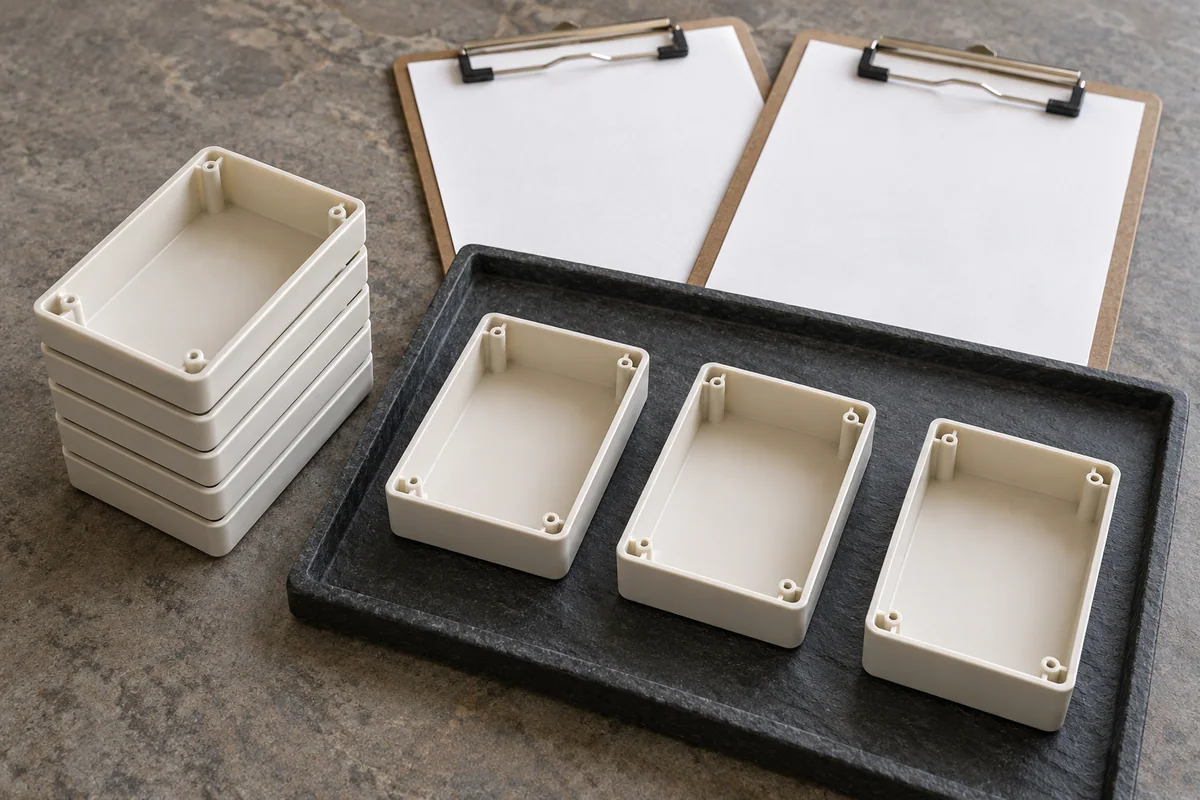
Before relying on an incoming inspection report, identify the population it covers and the checks performed on each part of that population. A report can count every carton, inspect the appearance of a few units and leave dimensions unchecked. One overall “pass” label can hide those different scopes.
A coverage register connects the defined lot, accessible goods, selected units, checked attributes and exclusions to the agreed decision process. It helps the buyer determine whether the report supports the intended acceptance decision. It does not create a sampling plan or turn limited observations into a guarantee about every unit.
Define the lot that the report is discussing
Start with the agreed lot definition and the received goods that can be mapped to it. Record the purchase-order lines, product variant, relevant supplier lot references, receipt events and total quantity on its stated basis. Keep an ordered quantity separate from a received or verified quantity when they differ.
Ask the report author how mixed models, different production references or separate arrivals were treated. Do not merge them solely because they share a seller or pallet. Equally, do not assume that one carton is one lot. The authorized plan and the actual traceability records must establish the population being considered.
Record what was available at the time of inspection. A missing parcel, inaccessible carton or sealed package can limit the work performed. The report should identify that limitation and its effect on the applicable plan; it should not describe unavailable goods as checked.
Separate coverage by attribute
Give each check its own row. Carton count, unit identity, cosmetic appearance, component inclusion, document revision and a specified dimensional feature answer different questions. A unit selected for one check is not automatically covered by all of them.
Retain the actual unit or package IDs where recorded. If results are aggregated, ask how the group can be identified and how its results relate to the evidence. A folder of photographs without a unit map leaves the reviewer uncertain whether it shows several units or repeated views of one.
Use precise coverage language. “All received outer cartons counted” describes a carton-count activity. It does not establish the inner piece count. “Visible finish observed on selected units” leaves hidden surfaces and other attributes outside that finding unless the report says otherwise.
Build an inspection coverage register
Keep the coverage register beside the original report and the agreed work order. It is a review aid, not a substitute inspection certificate.
| Register field | What to record | What remains visible |
|---|---|---|
| Population | Defined lot, variant, receipt references and quantity basis | Which goods the decision could cover |
| Availability | Accessible cartons/units and unavailable portions | Any gap between the intended lot and available goods |
| Selection | Actual unit IDs, quantity selected and documented selection method | Whether the selection matches the agreed plan |
| Attribute | Exact check and governing requirement reference | What was examined on that subset |
| Method/plan | Approved procedure, revision and applicable standard edition | Which decision framework was authorized |
| Findings | Recorded observations/nonconformities and linked evidence | What the performed check found |
| Exclusions | Unchecked attributes, surfaces, units and departures from scope | What the report has not established |
| Decision | Responsible reviewer, plan-based outcome and population covered | Whether lot disposition is authorized or still pending |
Make departures explicit. If fewer units were accessible than the plan required, do not quietly substitute the available number. Ask the authorized inspection owner to resolve the departure and explain whether the report can support any decision. The receiving coordinator should not select new sampling parameters to make the report appear complete.
Confirm the plan and edition without borrowing a table
ISO’s public entry identifies ISO 2859-1:2026 as the third edition, published in January 2026, covering acceptance-sampling schemes for inspection by attributes indexed by acceptance quality limit. It replaces the 1999 edition and its associated amendments. Only the public description was reviewed for this article; the full standard and its tables were not accessed. ISO 2859-1:2026 public entry
If an agreement cites ISO 2859-1, record the actual edition and approved plan settings used by the responsible specialist. “AQL inspected” by itself does not identify the plan or demonstrate that it was followed. Request the applicable plan record and report mapping; do not infer sample size or acceptance numbers from an online summary.
A newly published edition also does not silently rewrite an existing order. If the agreement names an older edition, flag that fact for the authorized owner to resolve. Keep the contractual baseline and any approved change visible. This article prescribes no edition substitution, AQL value, inspection level, switching rule or universal sample size.
Distinguish a lot decision from an individual check
NIST’s engineering statistics handbook explains acceptance sampling as using a sample to support a lot-disposition decision. It also distinguishes that purpose from estimating the lot’s quality. The result depends on the specified sampling plan and its implementation. NIST handbook: acceptance sampling
That distinction allows two truthful statements to coexist: identified units were individually examined for a particular attribute, and an authorized reviewer made a lot decision under the agreed plan. The lot decision does not mean the remaining units were individually checked. Conversely, an unchecked remainder does not automatically invalidate every properly supported sampling decision.
Keep both statements in the record. Do not turn “no issue observed in the selected units” into a claim of zero defects throughout the shipment, a predicted customer failure rate or a safety guarantee. A visual or sampled receiving report cannot establish internal battery safety, electrical compatibility, authenticity or regulatory compliance.
A fictional enclosure report with three different scopes
Assume a fictional receipt contains forty passive enclosures assigned to lot L-40 under an approved project definition. The report records all forty as counted, appearance observations on four identified units, and no dimensional checks. These numbers illustrate how to report coverage only; four is not a recommended sample size or an endorsed plan.
The coverage register contains separate rows: quantity count covering forty; appearance covering the four named units; dimensions not checked. If the report’s front page says “lot passed,” the reviewer should ask which requirement and decision authority support that statement and whether the recorded selection followed the agreed plan.
If the four were chosen simply because they were nearest the opening, preserve that selection description. Do not upgrade it to “random” or “representative” in the buyer’s summary. The responsible owner must decide what that evidence permits and whether additional authorized work is required.
Suppose the scope never included dimensions. Their absence is a known exclusion, not proof that the provider failed a dimensional inspection. If dimensional evidence is needed before the buyer can release the goods, that dependency remains open. The report can be complete for its ordered work while still being insufficient for a broader release decision.
Resolve coverage gaps before using an acceptance label
Send the report author the precise missing mapping: lot definition, selected IDs, attribute coverage, applicable plan reference or unexplained departure. Ask for a corrected report or existing supporting evidence. Retain the original and the explanation of what changed.
When the authorized owner makes a decision, record its exact population and purpose. An appearance acceptance should not silently clear missing manuals; a decision for one supplier lot should not include a later arrival by default. If the population changes, ask whether the prior decision still applies.
The useful final outcome is a report the buyer can interpret without guessing: these goods were available, these units received these checks, these exclusions remain, and this identified decision applies. That gives sampling its proper role while preserving the boundary between recorded work and a broader claim that every received product has passed every requirement.
Frequently asked questions
Do four inspected units mean a forty-unit lot passed?
Those numbers alone cannot establish acceptance. Identify the agreed plan, selection method, checked attributes and authorized decision. The four-unit example is only a coverage illustration.
Can a lot be accepted when some units were not individually inspected?
A valid authorized acceptance-sampling plan may support a lot decision from a sample. The report must still state which units and attributes were individually checked; lot acceptance is not an individual check of every unit.
Which ISO 2859-1 edition is shown in the current public entry?
The official entry reviewed on 13 October 2026 lists ISO 2859-1:2026, edition 3, published January 2026. The edition governing an existing order still needs to be identified and any change authorized.
Does a sampled visual inspection certify battery safety?
No. Its findings are limited to the recorded checks and population. It cannot certify internal battery safety, electrical compatibility, authenticity or regulatory compliance.
Sources
Discuss a sourcing request related to this article.Read Inspection Coverage Before Calling a Lot Accepted