
Approve a Packing Mockup Without Claiming Transit Performance
Record which packing features a mockup represents, which differ from the final plan and which performance questions remain untested.
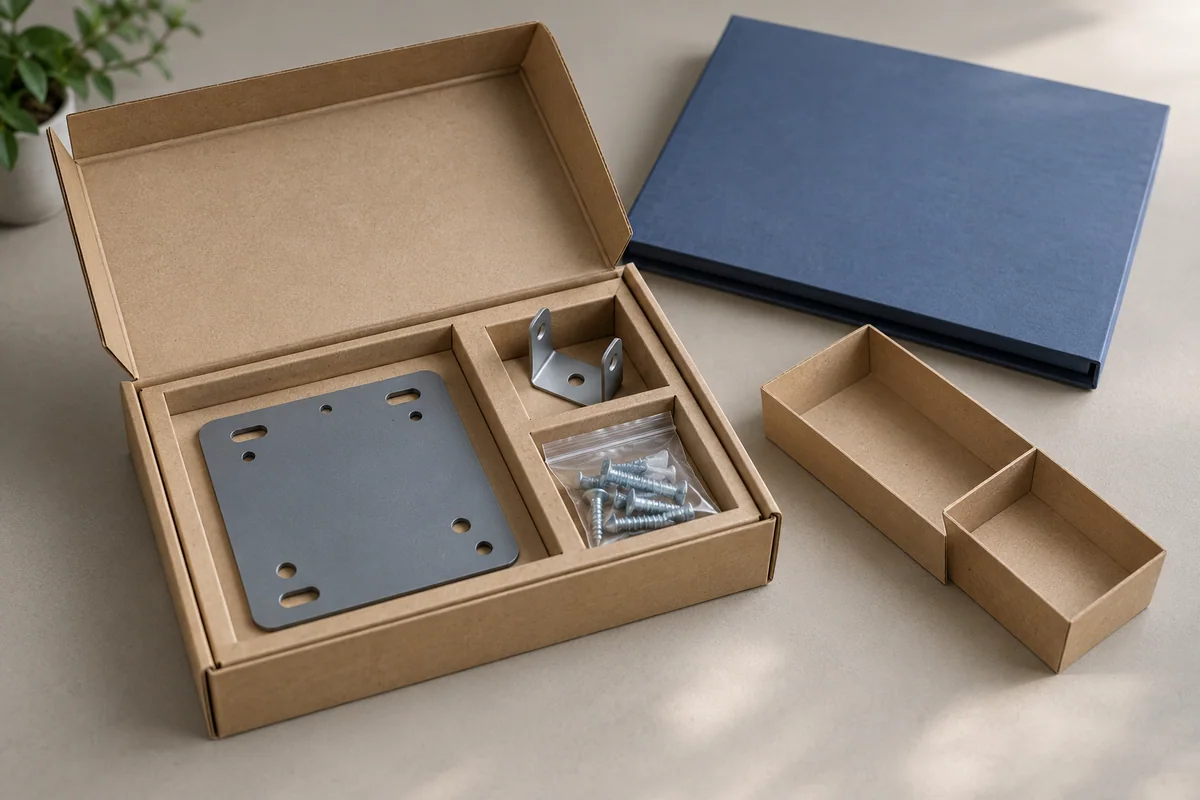
Approve a packing mockup feature by feature. The useful outcome is a record of what the reference demonstrates, what differs from the intended final configuration and which decisions still need evidence. “Packaging approved” is too broad when the buyer has only reviewed a compartment arrangement or photograph.
Create a mockup review boundary record before asking for approval. This article covers the layout and presentation of passive DIY parts and empty containers. It does not establish transport performance, select a testing protocol or provide battery packing guidance.
Give the mockup a traceable identity
Record the mockup reference, date, associated kit version, layout revision and materials information actually supplied. Identify whether the reviewer has a physical mockup, photographs, a video or a digital rendering. Preserve that distinction because each reference exposes different information.
A digital rendering can communicate the proposed arrangement while leaving physical execution unrepresented. A photo can show visible contents while hiding lower layers. A physical review can add specific observations, but its usefulness still depends on knowing what was supplied and what the reviewer actually examined.
Name any stand-in parts. A dummy empty shell, substitute pouch or different printed insert should remain a stated difference. If the supplier has not described the mockup’s materials, write “identity unconfirmed” rather than selecting a likely material from its appearance. An attractive reference is still usable for a limited purpose when those limits are explicit.
Record the questions before the observations
Tie each question to an approved packing requirement. Examples include whether the intended components occupy their assigned locations, whether the approved instruction insert appears at the intended opening stage and whether the detached cover remains visibly associated with its empty enclosure.
Avoid adding new product requirements during the mockup review. If the buyer decides to change the kit contents, record a proposed baseline change for the authorized owner. Do not label the supplier’s mockup nonconforming to a requirement that was never part of the agreed issue.
Define what evidence can answer the question. An overhead photograph may be adequate to discuss a proposed arrangement; it cannot show an obscured surface-contact interface. Request an appropriate additional view or owner-defined review only where needed. More images are useful when they close a particular gap, not simply because a larger gallery feels more complete.
Use a boundary record rather than one approval box
The record below is an editorial template. Its status terms are local planning choices, not labels taken from a certification scheme.
| Review row | Represented in this mockup? | Observation or evidence | Decision and remaining boundary |
|---|---|---|---|
| Approved component grouping | Identify actual parts and stand-ins | Reference showing the grouping reviewed | Accepted, revise or not reviewed for this feature |
| Instruction position | Name insert revision or blank substitute | View or physical observation of placement | Placement can be judged separately from file content |
| Contact material | Exact identity, substitute or unknown | Applicable material record, if supplied | Compatibility remains open without relevant evidence |
| Concealed arrangement | State what the reference exposes | Defined additional view or review record | Do not infer unseen placement |
| Final configuration differences | List every known departure | Difference register linked to intended issue | Each difference needs a closing decision |
| Transport performance | State whether applicable evidence exists | Traceable report for the relevant configuration, if supplied | Mockup appearance alone supplies no performance result |
Use one row per meaningful decision. If the material is temporary but the visible grouping is representative, the layout row may have a limited approval while the material row remains open. That is a clearer result than calling the whole mockup either approved or rejected.
A hypothetical substitute-insert review
Consider fictional mockup M-07 for a passive organizer kit. Layout L-03 assigns an empty enclosure to the left, its detached lid to the right and a sealed hardware pouch below. The supplied mockup shows those positions, but uses a temporary paper insert instead of the proposed final insert material. The instruction position is represented by a blank card.
The reviewer can record that the visible grouping matches L-03. The blank card can represent position and approximate presentation only to the extent actually demonstrated; it cannot establish that the final instruction file is correct or readable. The substitute insert cannot establish final material compatibility or transport protection.
A useful hypothetical decision reads: “M-07 accepted for the demonstrated component positions under L-03. Final insert identity and contact evidence remain open. Instruction file and final placement require review together. No transport-performance conclusion.” This is an invented example of bounded wording, not a real approval.
Now assume the supplier sends M-08 with the final insert but moves the pouch to make room. Do not merge M-07’s layout approval with M-08’s material identity and call the combination approved. Identify the actual configuration proposed for use and ask the relevant owner to review its changed feature. Evidence from different mockups can inform the decision only when its applicability is explicitly established.
Keep validation evidence outside appearance approval
ISTA’s public guidance distinguishes tests used for design screening from procedures intended to simulate distribution conditions. Selecting a relevant scope is a separate decision from agreeing how the open kit looks. ISTA public test procedure descriptions
If transport protection is a requirement, ask the qualified packaging owner to specify the needed evidence and the exact packed configuration it must represent. Record the acceptance criteria, responsible review and any differences between that configuration and the final packing issue. Do not provide improvised test parameters or infer a favorable result because the mockup feels sturdy.
A supplier may provide a report covering another version. Retain it as offered evidence with its actual scope, then ask whether it applies and what remains unresolved. This article cannot resolve that question without the project records and qualified assessment. No applicable report or performed test is supplied here.
Turn every open row into a next decision
An open issue should name the missing input, the person responsible for obtaining it and the approval it prevents. “Materials later” leaves the next person to guess. “Final insert identity and applicable contact evidence required before material approval” states a concrete dependency without inventing a deadline or obligation.
If the buyer accepts a temporary mockup difference for a limited design conversation, retain that difference through the later handover until an authorized decision closes it. Silence in a later email should not erase it. If the intended final design changes, update the target configuration rather than pretending the substitute always met it.
Finish the review with the mockup identity, accepted features, required revisions, unreviewed scope and next approval owner. Keep the record attached to the specific evidence. A bounded mockup approval moves layout decisions forward while making the remaining packaging work visible.
Frequently asked questions
Does approving a packed sample approve transport performance?
Only an approval with applicable evidence can address its stated performance scope. A layout or appearance review by itself supplies no transport-performance result.
Can I review a mockup with temporary materials?
Yes, for features it meaningfully represents. List every known substitute and keep material compatibility and other unrepresented requirements open.
Can a blank card stand in for the instructions?
It may represent a proposed position within the stated review limits. It does not establish final file identity, readable content, language assignment or the final printed insert configuration.
Can I combine approvals from different mockups?
Do not merge them by assumption. Identify the final configuration and have the relevant owner establish which earlier findings remain applicable and which changed features need review.
Sources
Discuss a sourcing request related to this article.Approve a Packing Mockup Without Claiming Transit Performance