
Agree Which Protective Layers Stay On Until Handover
Identify existing protective layers, name the removal authority and record the required handover state before changing a passive product for presentation.
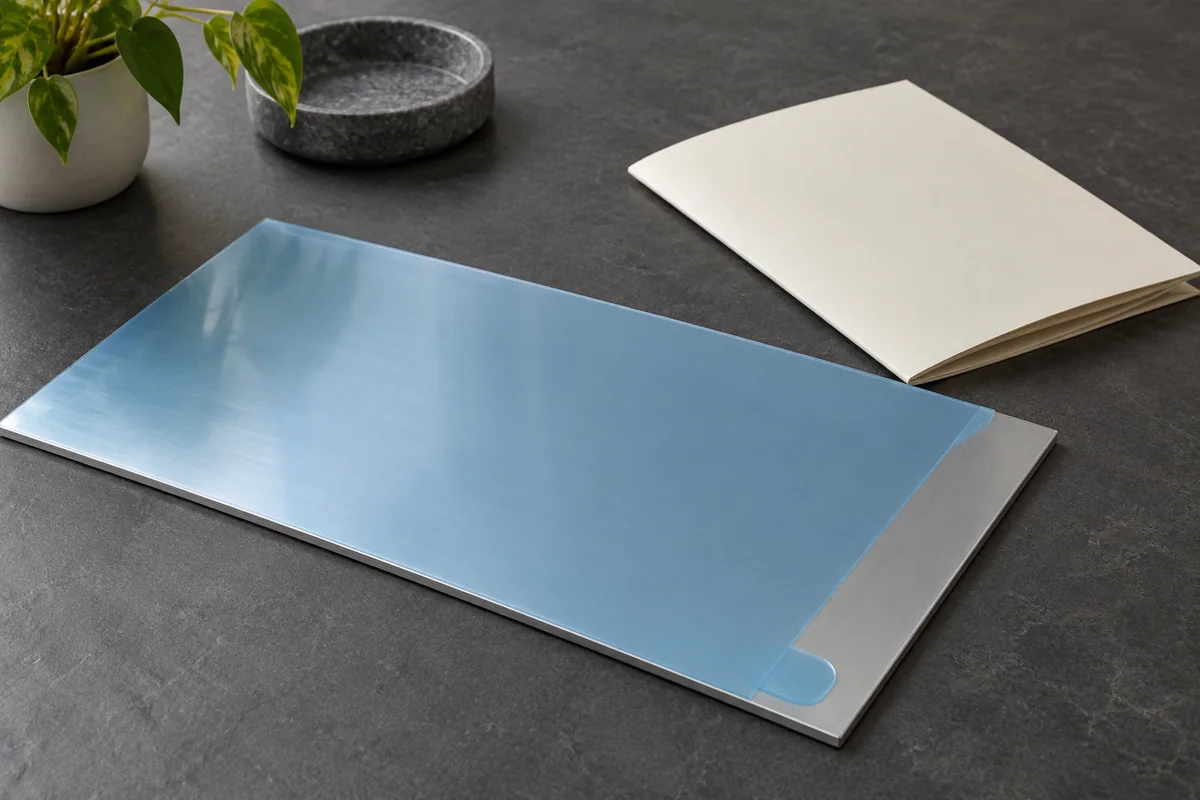
Agree the disposition of each existing protective layer before a passive DIY product is repacked or prepared for presentation. A packer should be able to tell which identified layer stays, which may be removed under an approved instruction, and which remains unresolved. A request for a cleaner-looking pack does not supply those decisions.
Use a protective-layer disposition list tied to the exact product and manufacturer guidance. No actual film identity, manufacturer instruction or buyer approval is available here. This article does not describe peeling, cleaning, solvents or replacement-film application, and it does not concern opening or repacking battery products.
Identify the layer before assigning an action
Give each layer a separate reference based on its position and known identity. An outer handling wrap, a factory-applied surface film and a product label should not share one row called “plastic.” Record the manufacturer’s description where it exists, and keep an unidentified layer explicitly unidentified.
Appearance alone cannot decide whether a layer is disposable packaging, a temporary process protection or part of the finished product. Ask the product owner or manufacturer to resolve its role. Do not direct the packer to lift an edge simply to find out what is underneath.
Keep required labels, product markings and integral components outside any casual film-removal instruction. If a proposed action could affect them, route that specific issue to the responsible owner. A packaging presentation preference must not silently authorize a product modification.
Separate permission, timing and method
For an identified removable layer, record three things separately: who authorizes the action, at which approved stage it may occur, and which applicable manufacturer or owner-controlled instruction governs it. Permission to remove does not supply a method, and a method found online does not establish permission for this product.
The agreed handover state also matters. Does the recipient receive the product with this layer present, absent or handled at a later controlled stage? Name the handover point rather than saying “remove before delivery,” which can mean before warehouse transfer, before presentation packing or before the recipient uses the item.
Do not turn uncertainty into indefinite retention. An unresolved layer requires a prompt owner decision and, where relevant, clarification of allowable conditions and timing. The packer should not improvise removal, but the record should also avoid claiming that leaving every film on indefinitely is harmless.
Read manufacturer guidance within its product scope
Nitto’s RAPGARD F101/F202 product page says performance depends on the adherent, environment and conditions or period after application. Its precautions also discuss possible issues following long storage after application. These are statements for the named manufacturer’s product, not a retention period for an unidentified DIY panel film. Nitto RAPGARD product precautions
The buyer’s practical lesson is to ask for the exact layer identity and applicable instructions before approving its disposition. Do not borrow a numerical limit or removal technique from an unrelated film. The public page does not establish what is on the buyer’s goods, whether it should remain, or whether its current condition is acceptable.
Record the source, revision or observation date and the person resolving applicability. If the supplier forwards general guidance, ask how it connects to the supplied product and layer. A document with the right manufacturer’s logo can still cover another material or use.
Create a protective-layer disposition list
The list should let the next person act without interpreting a chain of appearance requests.
| Disposition field | What to record | Decision it preserves |
|---|---|---|
| Product and surface | Exact passive product/reference and affected area | Which object the instruction covers |
| Layer identity | Manufacturer code or explicit unidentified status | Whether applicable guidance can be located |
| Intended role | Owner-confirmed packaging, temporary protection or other role | Whether removal is even a packaging decision |
| Applicable instruction | Exact source/revision and applicability confirmation | Which conditions govern any authorized action |
| Authorized disposition | Retain, remove at a defined stage, or pending owner decision | Prevent an appearance request becoming permission |
| Action owner | Person authorized to perform or coordinate the approved work | Keep the decision and execution responsibilities clear |
| Handover state | Identified layer present/absent and next responsible party | Avoid losing responsibility between stages |
| Open condition | Missing identity, timing, conflict or changed condition | Explain what blocks the decision |
Use one status per layer. “Leave protection on” is too broad when a product has several different layers, and “remove all packaging” can accidentally include something outside the approved scope.
A hypothetical presentation request
Imagine a fictional passive display panel P-26 supplied with outer wrap W-1 and an unidentified transparent surface layer U-1. The buyer wants the panel placed in a presentation sleeve. An existing approved instruction permits W-1 to be removed at the named repacking stage; it says nothing about U-1.
The disposition list can authorize the already defined W-1 action within its stated scope while keeping U-1 unresolved. The packer should ask the product owner to identify U-1 and define the appropriate handover state. “Make it look finished” does not resolve the missing instruction.
Suppose the owner later identifies U-1 as layer F-26 and supplies an applicable instruction requiring it to remain through this handover. Record that decision against F-26 and the named stage. The presentation layout then needs to accommodate that state, or the presentation request goes back for an authorized revision.
If instead the instruction permits removal at a later stage, preserve that timing and responsible party. Do not pull the action forward merely because the product is already on the packing bench. These are invented records demonstrating decision separation, not evidence that any layer has been identified, removed or assessed.
Handle conflicts without improvising a remedy
A buyer appearance request may conflict with manufacturer guidance, or two messages may name different handover states. Keep both references and ask the authorized owner to resolve the conflict for the exact product. Do not choose the newest message solely because it arrived last.
If a layer’s condition changes before the planned handover, refer the changed condition to the owner. The disposition list should not contain an improvised cleaning, removal or reapplication remedy. Any replacement layer introduces a new identity, contact relationship and approval question; it cannot inherit the old film’s status automatically.
Close the planning decision when each relevant layer has an identified role, applicable instruction, authorized state and next owner. Leave genuine unknowns visible and time-bound by the owner’s required decision point. The resulting handover tells the packer what is authorized while preserving the manufacturer’s limits and the buyer’s approved product configuration.
Frequently asked questions
Can the packer remove factory film to improve presentation?
Only when the exact layer is identified and the responsible owner has authorized its disposition under applicable instructions. A cosmetic preference alone does not supply permission or a method.
Should every protective film stay on until the customer opens the pack?
There is no blanket rule here. Obtain the exact layer guidance and agreed handover state; unresolved identity needs a prompt decision rather than indefinite retention or improvised removal.
What should happen when the layer is unidentified?
Record its location and unknown identity, pause the dependent change and ask the product owner or manufacturer to establish its role and applicable instructions. Do not invent a removal technique.
Does approval to remove a wrap cover a surface film underneath?
Only if the authorization expressly covers that identified film and stage. Give each distinct layer its own disposition row so permission is not extended by assumption.
Sources
Discuss a sourcing request related to this article.Agree Which Protective Layers Stay On Until Handover