
Match Delivered Labels and Manuals to the Approved Files
Compare received labels and manuals with approved revisions, languages and page coverage without turning file matching into content approval.
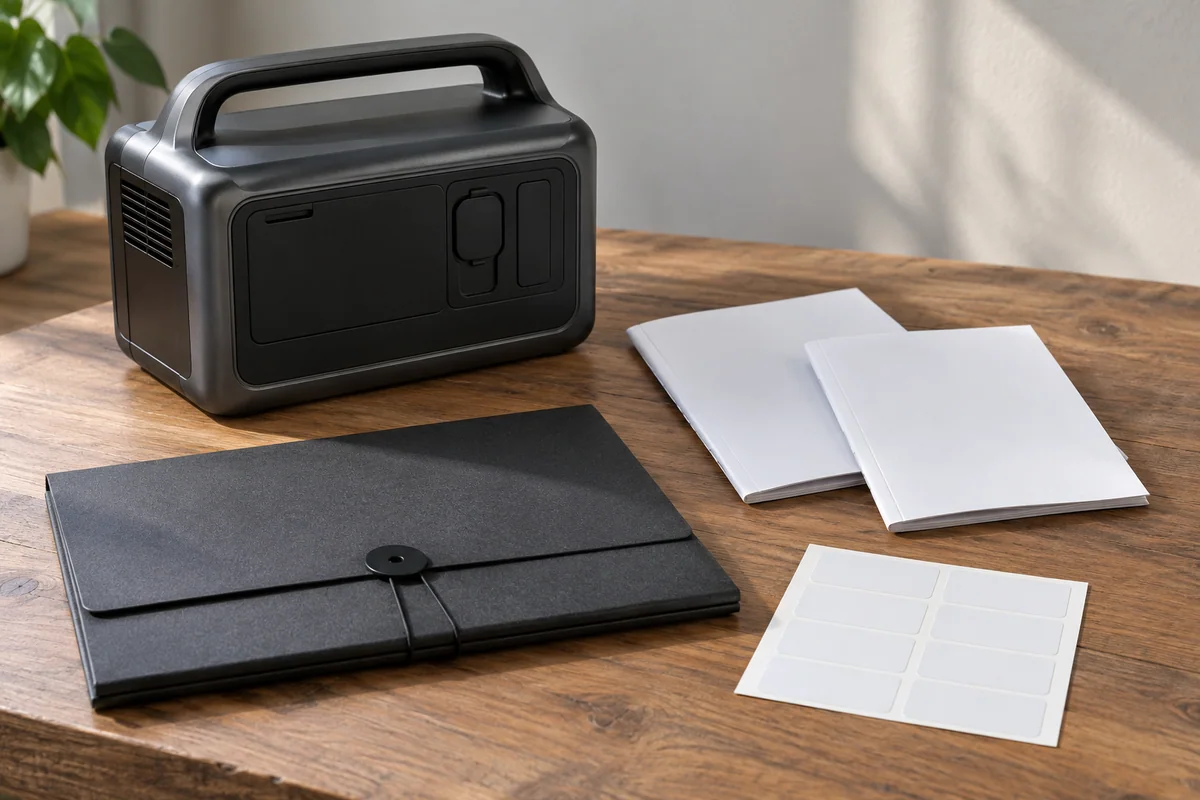
Compare delivered labels and manuals with the exact files approved for that order. A familiar cover, correct language name or matching filename can conceal a wrong revision, missing page or label for another variant. A delivered-document crosswalk makes each artifact, language and received population visible before the documentation-dependent decision is closed.
This is a receiving comparison after content and production proofs have been approved. It does not write a manual, validate a translation or decide which regulatory markings a product needs. No actual approved files, order or received documents were supplied for this article, so the worked example uses invented references.
Retrieve the approved package, not the latest attachment
Find the approved file, its revision and the approval that applies to the purchase. Check the product variant and the artifact’s role: product label, package label, quick-start leaflet, full manual or digital download. Separate artifacts should retain separate rows even when their titles sound similar.
A later file in a chat is not automatically the approved production version. If someone issued a replacement, retain the authorized change and the affected order or lot. If the approval refers only to “the attached manual” and several candidates remain, ask the owner to identify the file before judging the delivery.
Record each required language separately, including its link to the approved source and proof. Do not assume that an English revision change also updated the Spanish file, or that a multilingual cover proves all required language sections are present. Use the languages agreed for the deliverable without inferring destination-specific obligations.
Give every delivered artifact a row
Begin with the approved file index and add the received evidence beside it. A crosswalk should describe both digital and physical delivery where the order requires both; receiving a PDF does not by itself establish that the printed copies accompanied the goods.
| Crosswalk field | Approved baseline | Delivered evidence |
|---|---|---|
| Product coverage | Order line, model/variant and applicable lot scope | Product and receipt references actually associated with the artifact |
| Artifact identity | Label/manual ID, purpose and revision | Visible document ID, revision or explicit absence of one |
| Language | Approved language version and linked source revision | Language/section observed and reviewer limitation |
| Extent | Approved pages, panels or required sections | Pages/panels checked, omissions and unchecked portions |
| Format and inclusion | Agreed physical/digital form and quantity basis | File received, booklet count or package-level evidence |
| Content comparison | Exact approved proof or master file | Comparison record and locations of differences |
| Evidence | Approval and baseline file references | Receipt images, original delivered files and report IDs |
| Decision | Named content/production owner for the relevant question | Specific outcome, affected units and unresolved issues |
Where printed material has no revision code, do not invent one. Identify the received copy through its receipt, package and evidence references, then compare it with the approved file on the agreed basis. A cover photograph may establish a visible title; it cannot establish every interior page.
Compare identity and completeness before interpreting meaning
Check the document/model references, language, page or panel extent and required inclusion first. Record different identifiers, missing pages, duplicated sections, blank printing or omissions as observed, with their precise locations. Preserve the baseline beside the delivered evidence so the reviewer can inspect the difference.
Then distinguish three questions. Does the delivered item reproduce the approved version? Does its wording or translation correctly communicate the product information? Does the content meet applicable technical or regulatory requirements? A receiving coordinator can document the first comparison within the authorized scope. The latter questions need the appropriate qualified owners.
Even a faithful reproduction may expose a concern in the approved source. Record it and route it to the content owner; do not silently edit the delivered manual or issue substitute instructions. Matching an approved file is a production finding, not a fresh safety or legal approval.
Keep the comparison method visible
For digital documents, retain the original delivered file and identify the baseline used. If a comparison tool assists the review, keep its settings and report with the crosswalk. A result described as “no differences found” is incomplete unless the reader knows which pages and kinds of content were compared.
Adobe’s current Acrobat Pro guidance illustrates the issue: its text-only comparison can exclude graphics, comparison can be limited to selected pages, and certain difference categories are hidden by default in the report view. A clean-looking comparison summary must therefore be interpreted with its actual scope. This is a software example, not a requirement to buy Acrobat or a guarantee that a tool detects every relevant difference. Adobe guidance on comparing PDF versions
For physical print, link the observation to the received copies and the approved proof. Keep checked page coverage explicit. Do not call the entire batch correct because one photographed spread matches. If the order calls for all pages or particular panels to be reviewed, the report should show whether that work occurred.
For a delivered download link, record the destination and the file/revision observed at the time of the authorized check. A link may lead to a newer file later. Treat that later observation as new evidence instead of assuming it describes what originally accompanied the goods.
A fictional revision mismatch with mixed languages
Suppose an invented order for product P-14 requires manual M-14 revision C in English and Spanish. The approved English and Spanish files are separately identified. Receiving photographs show an English booklet marked revision B, while a Spanish booklet shows revision C on its cover. Only the covers have been photographed.
The crosswalk should record an observed English revision mismatch and a Spanish cover-identity observation with interior content unchecked. It should not mark all Spanish documentation accepted or infer that the product itself is unlawful. The responsible owner needs to determine the consequence of the mismatch for the affected receipt.
A useful request asks for the delivered English file or full agreed comparison evidence, confirmation of which received packages contain revision B, and the missing Spanish coverage evidence. If the supplier sends a corrected revision C PDF, record that digital delivery separately. It has not established that the physical revision B booklets were replaced.
If replacement printed copies later arrive, link their receipt and verification to the original discrepancy. The authorized decision should identify whether the required physical and digital deliverables are now complete, and which goods it covers. This hypothetical sequence contains no actual product review or legal conclusion.
Keep correction and approval with the right owner
A wrong file, missing page or absent language is a specific receiving discrepancy. A disputed translation, changed warning or model-instruction conflict is a content question that requires qualified review. State which issue is open so the supplier does not close a technical concern by merely changing a cover revision.
Do not remove required information, approve a certification mark, replace warnings or direct relabeling as an informal warehouse correction. Any proposed correction needs the applicable authorization and controlled replacement file. The receipt record should document the resulting evidence, rather than become a channel for improvised technical instructions.
Close the crosswalk when each required artifact has a supported outcome and the affected product population is identifiable. Retain unchecked pages, sealed packages and outstanding specialist reviews explicitly. That gives the buyer a defensible record of what documentation arrived and what remains to be decided, without turning file matching into a claim that the product is safe, authentic or compliant.
Frequently asked questions
Does a matching manual cover prove the correct manual arrived?
It establishes only the visible cover information. Keep the interior pages and other required content unchecked until the agreed comparison covers them.
Can a corrected PDF close a wrong printed-manual discrepancy?
Only if the authorized decision expressly accepts that outcome. Receiving a digital correction does not establish replacement of physical booklets required by the order.
What if the newest file differs from the approved production proof?
Use the version authorized for the order, and ask the owner whether a documented replacement applies. Recency or a matching filename alone does not establish approval.
Does matching approved artwork prove regulatory compliance?
No. The receiving comparison establishes reproduction and completeness within its scope. Technical, translation and regulatory content approval remain separate responsibilities.
Sources
Discuss a sourcing request related to this article.Match Delivered Labels and Manuals to the Approved Files