
Define the Supply Boundary in an Energy-Storage RFQ
Define an energy-storage RFQ with itemized supply, documentation and service responsibilities so missing controllers or integration work stay visible.
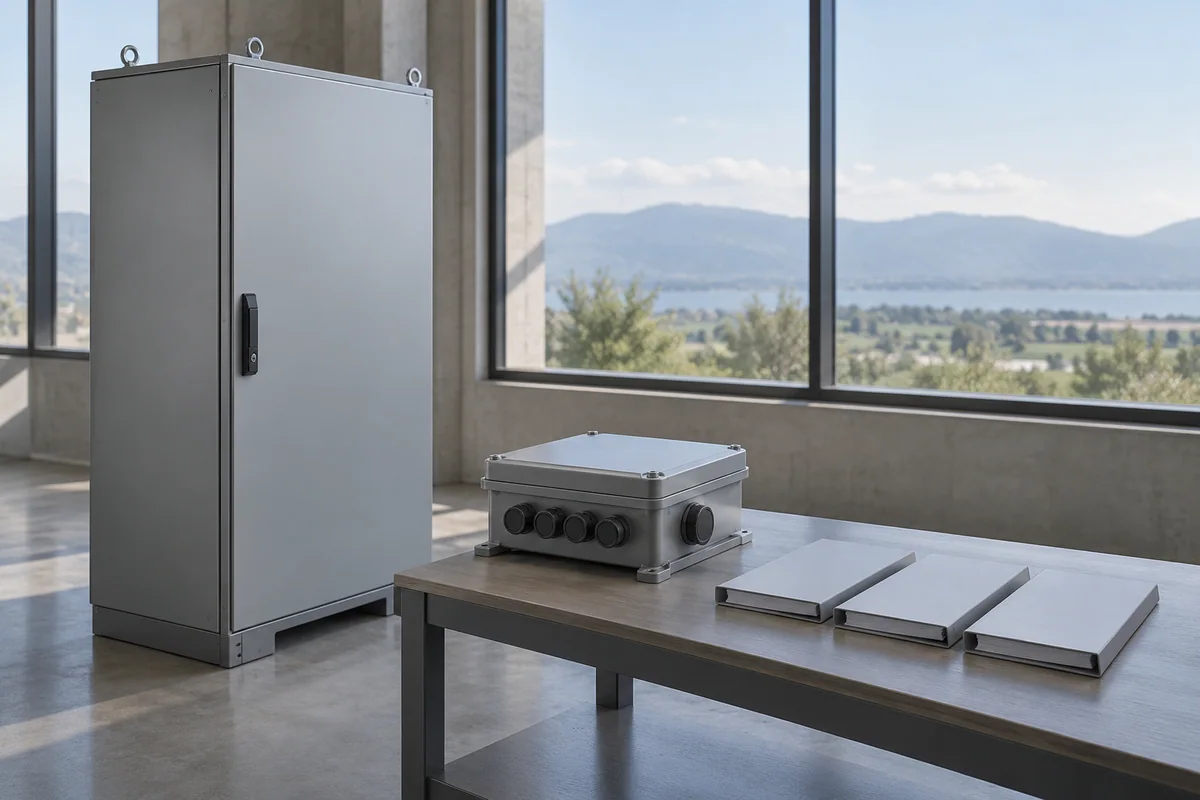
An energy-storage RFQ needs a clear answer to “What will this supplier deliver?” before its price can be compared with another offer. Begin with the project specification approved by the responsible qualified person, then assign every required product, document and service to a named party. A polished cabinet description can still leave essential work unassigned.
This article is for procurement teams that already have a qualified project owner. It provides a scope-of-supply and responsibility matrix. It does not design an energy-storage system, select electrical components or explain installation and commissioning procedures.
Start with a defined project boundary
Give the RFQ a project reference and specification revision. State whether the supplier is quoting a component, an assembled product or a system package with a defined integration scope. Describe the handover expected from that supplier in plain words. Avoid “complete system” unless the attached schedule explains exactly what complete means for this purchase.
Ask the project owner to provide the approved equipment and interface requirements, intended application and destination for specialist review. Procurement should transfer those requirements accurately. If the design is still unresolved, identify the open decision and the person responsible. Do not ask multiple sellers to price different unstated assumptions and expect the cheapest number to resolve the design.
A responsibility can be assigned to another contractor without being included in the equipment seller’s price. Record both facts. “Buyer to provide” is only useful when the buyer has identified the person or organization that has accepted the task.
Build the matrix before comparing offers
Use one row for each required deliverable or workstream. Split a row when hardware and associated work have different owners. For example, a supplied controller and the work of confirming its configuration should not disappear inside a single “accessories included” statement.
| Item or workstream | Scope to describe | Evidence requested with quote | Responsibility to close |
|---|---|---|---|
| Main product | Manufacturer, exact model, quantity and revision | Model-specific datasheet and configuration schedule | Equipment supplier; technical acceptance owner |
| Required accessories | Each approved accessory and quantity | Part identifiers; included, optional or excluded status | Supplying party and reviewer |
| Controls and communications | Approved devices and interface requirements | Manufacturer-supported combination and stated conditions | Named integration owner |
| Software where required | Version, required functions and any access or license scope | Written inclusion, dependencies and commercial conditions | Supplier and buyer’s designated owner |
| Product documentation | Manuals, drawings and required evidence index | Document identifiers, revisions and covered configuration | Document provider and reviewer |
| Integration and installation | Precisely bounded work requested or excluded | Written service scope and handover responsibility | Qualified contractor or project owner |
| Commissioning and handover | Whether the service is requested and who accepts it | Separately stated scope, records and exclusions | Qualified service provider and acceptance owner |
| Unresolved project approvals | Decision and authority still needed | Required submission or clarification identified by specialist | Project owner; no assumed approval |
Add columns for quote line, amount or inclusion reference, status and due date. Use “included in line 4,” “separately quoted,” “excluded and assigned,” or “unresolved.” A blank cell should never be interpreted as a free included service.
Not every row applies to every purchase. The project owner should mark a row not applicable with a reason rather than letting procurement invent additional equipment. The matrix captures the approved project scope; it is not a shopping list for constructing a system.
Match each evidence claim to its level
Document the object a claim covers: an individual component, an assembled product or the stated system configuration. Keep its issuer, reference, model coverage and stated conditions beside it. If a document names only one part of the offer, flag that limit for the responsible reviewer.
UL Solutions describes UL 9540 as covering a broad energy-storage-system review, including control and communication between devices. It separately identifies UL 9540A as a thermal-runaway fire-propagation test method. These public descriptions help distinguish the questions being evaluated; they do not establish approval of a supplier’s cabinet or proposed installation. UL Solutions system and test-method scope
Ask the project owner which evidence is actually required for the intended product and location. Then ask the supplier to connect that evidence to the quoted configuration. Do not substitute a general standards list for an applicability review, and do not assume that every country or project requires the same documents.
Expose the handoffs between suppliers
A scope gap often appears between two apparently complete offers. The product supplier may expect another party to provide a controller. The installer may expect the product to arrive with that controller and its documentation. Both can describe their own work accurately while the combined procurement plan remains incomplete.
For each handoff, record what must be delivered, by whom, to whom and against which reference. Ask both parties to acknowledge the boundary. Include who answers interface questions and who coordinates a proposed change. This avoids relying on the purchasing contact to make engineering decisions simply because it forwards the messages.
Where software, licenses or remote services are required by the approved specification, ask what is supplied and what depends on a separate agreement. Confirm whether any recurring service is proposed. Do not infer permanent access, included configuration work or a particular support period from the presence of a display or communications port.
Apply the matrix to a hypothetical cabinet offer
Assume a fictional approved project specification, ES-04 revision C, requires a closed cabinet, controller CT-2, matching documentation and a separately defined commissioning service. Supplier A quotes the cabinet and manual but explicitly excludes CT-2 and commissioning. No actual product or engineering requirement is represented by these identifiers.
Enter the cabinet as included and the controller as excluded with no confirmed provider. Commissioning is also excluded, but a named qualified contractor has supplied a separate scope for review. The missing controller owner keeps the overall procurement decision on hold. Neither exclusion should be silently assigned a zero cost.
Ask Supplier A for a separately identified controller proposal if that is within the authorized project scope. Alternatively, have the project owner assign another qualified source and confirm the documented combination. Do not select a generic controller from appearance or matching headline ratings. The decision closes only when the missing scope and its review responsibility are explicit.
Freeze one complete procurement record
Before selecting an offer, reconcile the matrix with the quotation and document index. Every required row should have a defined supply or service owner, an evidence status and an acceptance owner. Keep an unresolved dependency visible even if the main equipment price is attractive.
Hold when no qualified person owns the specification, a required item is excluded without a confirmed provider, configuration evidence does not match, or two parties assume the other will do the same essential work. If the supplier revises the model or configuration, update the relevant rows and obtain renewed review before relying on the earlier decision.
Keep final-mile access charges, unloading arrangements and freight calculations in the delivery enquiry. Here, the RFQ should establish where product supply and integration responsibilities begin and end. Ask any sourcing contact to quote its own coordination tasks explicitly; evidence collection should not be mistaken for an included engineering or certification service.
Frequently asked questions
Does a cabinet quote cover a complete energy-storage system?
Only the written scope can answer that. Match each approved item, document and workstream to a quote line and a named responsible party.
Who decides whether a controller or software is required?
The responsible qualified project owner should establish the requirement from the approved design and applicable manufacturer documentation. The RFQ records and prices that requirement.
What should an excluded service look like in the comparison?
Show the exclusion explicitly, name the alternative provider if confirmed, and retain any missing scope, price or approval as unresolved.
Does a UL 9540A report settle complete-system approval?
The cited UL page describes UL 9540A as a test method. Have the responsible reviewer identify and verify the evidence required for the exact system and installation; do not relabel one report as a broader approval.
Sources
Discuss a sourcing request related to this article.Define the Supply Boundary in an Energy-Storage RFQ