
Record Cosmetic Finish Differences Against an Agreed Reference
Use an appearance observation sheet to link visible finish differences to the approved reference, viewing conditions and authorized decision.
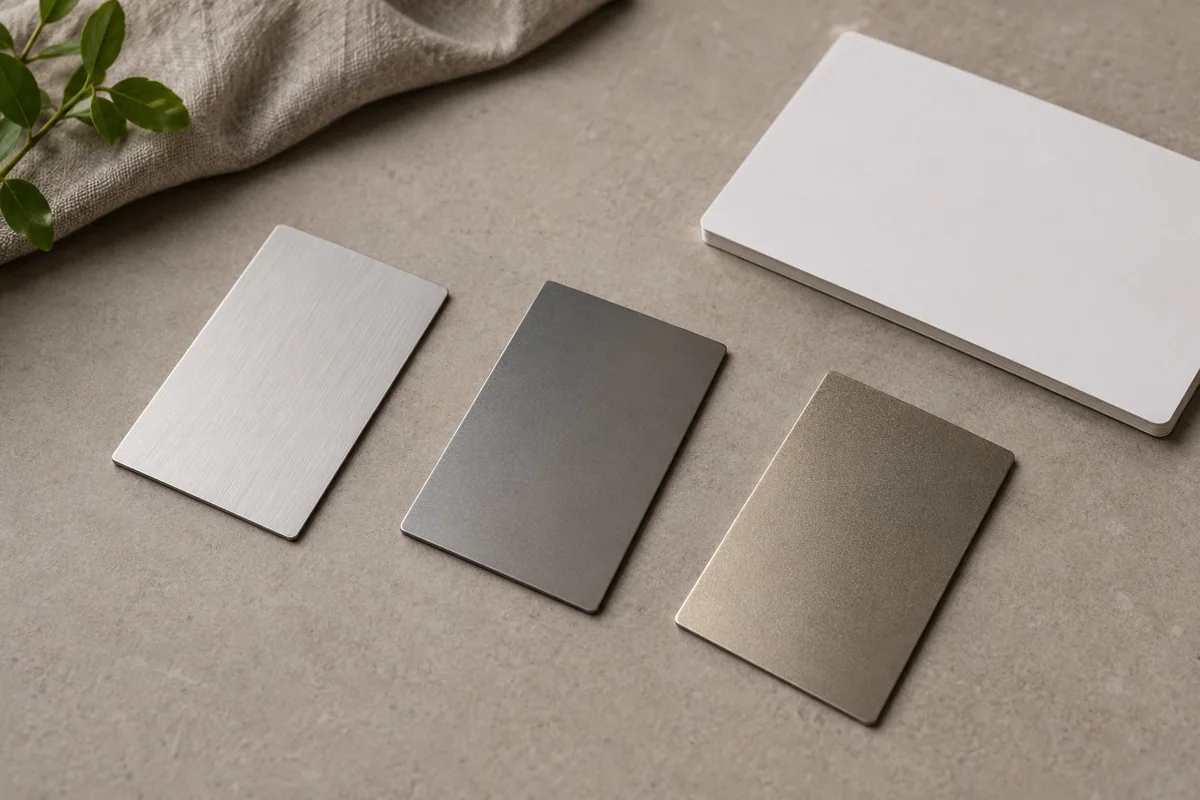
Record a cosmetic difference against the reference and viewing conditions the buyer actually approved. “Looks too shiny” can identify a concern, but it does not establish a failed requirement until the report shows what was compared and who may decide. A useful receiving record preserves the appearance observation while keeping the acceptance decision open when the criterion is missing.
This method is for the visible finish of passive parts, such as brackets, covers and empty enclosures. It does not identify alloy, coating chemistry, corrosion resistance or structural condition. No actual order, approved sample or receiving photographs are supplied here; the worked example is hypothetical.
Retrieve the cosmetic baseline before judging the delivery
Find the reference named in the accepted order: an approved physical sample, an identified finish specification, controlled images or another expressly agreed basis. Record its identity, revision and approval record. A marketplace image or the seller’s latest photograph should not replace that baseline without a recorded decision.
Check which surfaces the agreement covers. If it distinguishes exposed faces from concealed areas, preserve that distinction using its own terminology. Do not invent cosmetic classes after the goods arrive. The responsible owner must resolve any missing location, extent or viewing criterion before a receiving observation can be judged against it.
Also check whether appearance and process are separate requirements. An order can require both a particular visual finish and evidence of a specified coating process. A visual comparison answers only the appearance question. Leave the process-evidence requirement open until the required records arrive, even when the parts look similar.
Describe what is visible without guessing its cause
Use neutral observations that another reader can locate: a lighter patch near an identified edge, a linear mark on the outward face, or an area that appears more reflective than the reference under the recorded conditions. Give the unit or package reference and the relevant image IDs.
Avoid turning an observation into a diagnosis. “Bright line beside mounting opening” is more defensible than “plating failure” when no process investigation has occurred. Likewise, a color difference does not establish a different alloy, and a smooth appearance does not demonstrate adhesion or corrosion performance.
If the report includes an extent, preserve how it was determined. An estimated visible extent should remain an estimate. Do not add precise dimensions from an unscaled photograph or describe an unseen surface as checked. If an issue might be more than cosmetic, keep its cause and significance unresolved and refer it to the appropriate qualified owner.
Keep an appearance observation sheet
The sheet should allow a reviewer to move from a concern to its exact evidence without searching a chat history. Use separate rows for different units or differently located observations where that distinction affects the decision.
| Field | Record to retain | Decision supported |
|---|---|---|
| Received object | Receipt, ordered part/variant and unit or package ID | Which goods the observation concerns |
| Approved reference | Sample/file/specification ID, revision and approval | What comparison was authorized |
| Covered surface | Drawing view or plain location tied to a unit image | Whether the observation concerns a specified area |
| Viewing record | Actual lighting, orientation and other agreed conditions as reported | Whether the comparison can be interpreted on the agreed basis |
| Observation | Appearance, location and stated extent, with uncertainty retained | What was visible, without diagnosing process or cause |
| Images | Original context and detail-image IDs, including the reference where applicable | Which evidence illustrates the observation |
| Coverage limit | Units and surfaces observed; hidden or unavailable areas | What the observation cannot represent |
| Disposition | Named owner, criterion applied, affected units and written decision | Whether this appearance issue is accepted, unresolved or rejected |
Do not assign “minor” or “major” simply because a mark looks small in a photograph. Use the classifications, if any, defined for the order and the reviewer authorized to apply them. A familiar inspection vocabulary cannot supply a missing contractual criterion.
Make viewing differences visible in the record
A comparison made under different conditions may need clarification before it supports a decision. Record those differences rather than trying to edit images until the colors agree. Preserve the originals; identify annotations or presentation copies so they cannot be mistaken for the unaltered evidence.
ASTM D1729-22’s public scope concerns visual comparison of diffusely illuminated opaque materials and emphasizes controlled examination and the observer. It also excludes the viewing conditions needed for critical appraisal of metallic and pearlescent effects. This is a useful reminder to check whether an agreed method applies to the finish in question. The full standard was not accessed, and this article does not establish a D1729 inspection procedure or claim compliance. ASTM D1729-22 public scope
For the buyer’s record, ask what conditions were actually used and how they relate to the agreed comparison. If the baseline is a physical sample but the reviewer receives only photographs, identify that limitation. A receiving photo set can communicate a concern without becoming a calibrated color measurement or a substitute for a required physical comparison.
Request additional evidence only within the authorized safe scope. Do not direct removal of a coating, scraping, solvent application, adhesion testing or other improvised investigation to settle an appearance disagreement. Those would be different tasks requiring appropriate methods and authority.
A fictional matte-bracket discrepancy
Assume an order names matte reference sample REF-M revision B for passive bracket BR-07. A receiving image of unit U-03 appears glossier than a supplier image of that reference. The two images were taken under different, incompletely recorded lighting. All identifiers and events in this example are invented.
The first row should say that U-03 appears different in the submitted images and that comparison conditions are unresolved. It should not say “wrong coating confirmed.” Ask whether the reference in the image is the approved REF-M revision B, then request evidence using the already agreed comparison conditions or the responsible owner’s direction.
Suppose the provider later sends a properly identified comparison record and the buyer’s authorized appearance reviewer accepts the visible finish for U-03. Record that decision against the supplied evidence and the specific appearance requirement. It does not show that the coating process is correct or extend acceptance to every bracket in the shipment.
Alternatively, if no appearance criterion was ever agreed, the reviewer must make and document the current decision. The receiving team should not pretend that an unstated gloss threshold existed at purchase. Keep any accepted deviation tied to this receipt and defined scope so it does not silently change future orders.
Ask a question the supplier can answer
A useful discrepancy request names the received unit, the approved reference, the observed location and the missing comparison information. Ask for the existing evidence or clarification required to resolve that row. Avoid broad demands such as “prove the finish is good,” which invite unsupported promises instead of a usable record.
If the supplier claims the mark is harmless, retain that statement as its response. The authorized buyer reviewer still needs to decide whether it meets the appearance criterion and whether a separate technical assessment is necessary. A seller’s explanation alone should not overwrite the original observation.
Finish the review with a narrow, readable outcome: appearance accepted for the identified units and criterion; further comparable evidence required; or the identified appearance requirement not met, as decided by its owner. Keep remedies and replacement-freight costs in their separate commercial records. The purpose of the observation sheet is to make the cosmetic decision traceable without converting appearance into a claim about material, process or safety.
Frequently asked questions
Can a photo show that the wrong coating process was used?
A photograph may show an appearance difference, but it does not by itself establish coating chemistry or process. Keep that separate evidence requirement open.
What if two images make the same part look different?
Retain both originals and record the different viewing conditions. Ask for comparison evidence on the agreed basis rather than editing the images or declaring a defect from an unexplained difference.
Who decides whether a scratch is acceptable?
The named buyer reviewer applies the agreed cosmetic criterion. Receiving should identify the affected unit, location, observed extent and evidence without inventing a scratch limit or defect class.
Does cosmetic acceptance apply to every unit in the delivery?
Only to the population explicitly covered by the authorized decision and its supporting scope. An observation or decision on one unit should not silently cover the rest.
Sources
Discuss a sourcing request related to this article.Record Cosmetic Finish Differences Against an Agreed Reference