
Control Leftover Components When Changing Kit Versions
Use a kit-version changeover record to identify old pouches, inserts and unfinished packs before starting the next approved configuration.
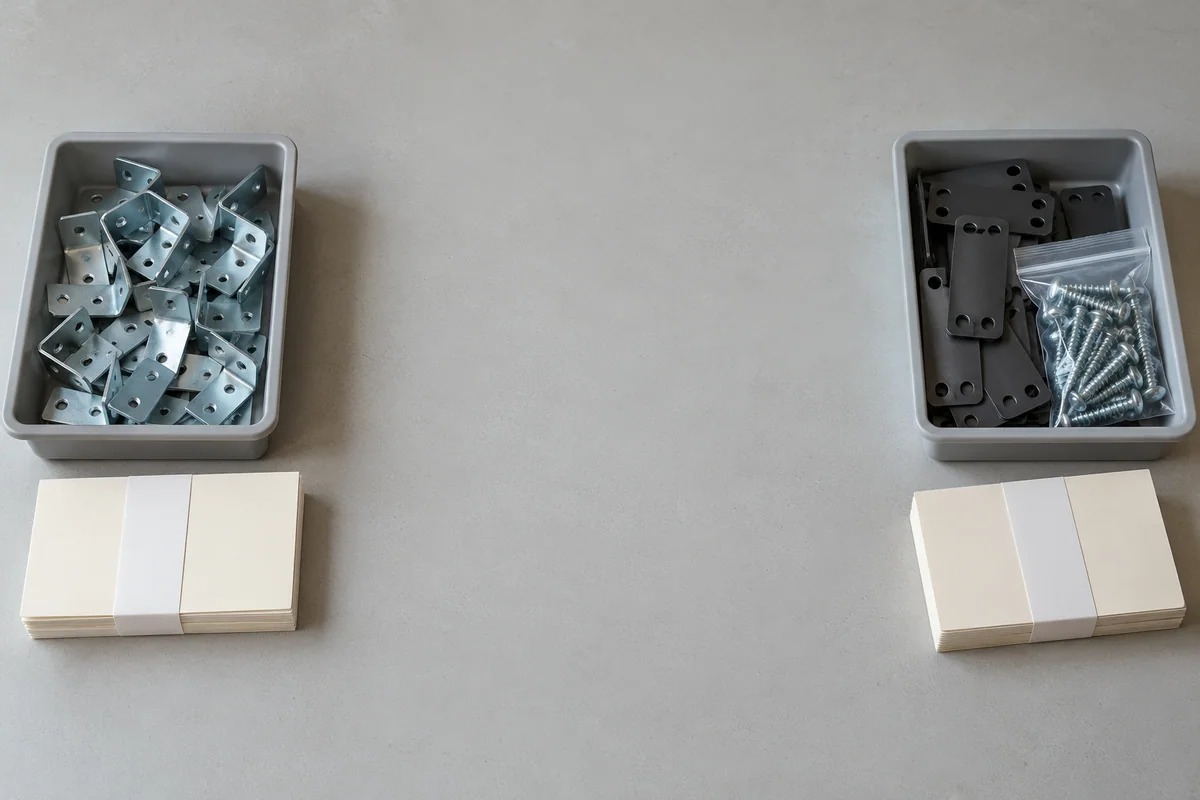
Before a packer changes kit versions, agree what happens to the outgoing components, pouches, printed inserts and unfinished kits. A newer contents list does not explain which leftovers remain usable, which belong only to the previous version or who can decide their disposition.
Use an administrative changeover checklist joining the outgoing configuration, its remainder, the incoming references and the authorized start decision. This is a planning method for passive DIY kits. It does not prescribe machinery operation, claim regulatory line clearance or guarantee an error-proof packing process.
Identify both configurations precisely
Name the outgoing kit version and its current contents, pouch map, insert revision and packing layout. Then list the corresponding incoming references. A difference column should identify changes and explicitly common items. “Same kit with one update” is too loose when the update affects several linked materials.
A component can remain physically identical while its pouch grouping changes. A printed insert can become outdated even if most text is unchanged. Treat these as distinct questions: does the item still belong, does its existing grouping still belong, and is its identification still correct? A yes to the first does not settle the other two.
Ask the responsible buyer owner to approve the version difference before the changeover starts. The packer can identify practical questions and propose an arrangement, but should not infer a new kit definition from leftover stock. Preserve the outgoing definition so the remainder can still be understood afterward.
Give every remainder an identity and owner
Include loose components, completed pouches, unused printed material and partially packed kits. Describe the identification level that actually exists. If a bundle is identifiable only as a mixed unresolved remainder, record that limitation instead of assigning invented part or version certainty.
Agree how the outgoing material will be kept distinguishable from incoming work under the packer’s actual process. Request a documented location or other controlled reference and a responsible person. The provider and authorized owner must settle an appropriate process for these passive items.
Record an intended disposition such as retained for the outgoing version, awaiting buyer decision, proposed for incoming use or subject to an authorized rework instruction. Keep that intention separate from completion. “Return requested” and “returned with evidence” describe different events. Do not direct destruction or disposal merely because stock is no longer required in the next kit.
Use a changeover checklist with closing conditions
The checklist should expose questions that prevent the incoming configuration from being followed reliably.
| Changeover field | Record | Closing condition |
|---|---|---|
| Outgoing issue | Kit version, pouch map, insert and layout references | All outgoing material can be interpreted against one issue |
| Version differences | Components removed, retained or regrouped; changed printed material | Authorized owner resolves membership and grouping questions |
| Unfinished kits | Identified kits and their known packing stage | Clear instruction for completion, rework or continued hold |
| Leftover material | Identity, quantity basis and actual distinguishability | Remainder has an owner and documented intended disposition |
| Proposed transfer | Exact common item and incoming destination | Explicit acceptance of identity, grouping and applicable condition |
| Incoming issue | Approved contents, materials, layout and insert references | One coherent set available to the packer |
| Start acknowledgement | Responsible person, issue received and open exceptions | Authorized start scope and dependencies are recorded |
A checklist should not force every row into “passed.” “Unresolved, do not use in incoming kits” is a useful administrative result when the available information cannot support transfer.
A hypothetical pouch remainder
Assume fictional kit A contains a sealed pouch with four passive spacers and one decorative clip. Kit B retains the spacers but omits the clip. Both are ordinary non-safety-critical parts. The buyer has not authorized repacking old pouches or changing either kit’s defined contents.
For an invented run record, 120 A pouches were issued to the packing task. Ninety-six are recorded as incorporated into completed A kits, fourteen remain unused and ten belong to identified unfinished A kits. The administrative reconciliation is 96 + 14 + 10 = 120 pouches. These are hypothetical records, not physical counts from a real facility.
The fourteen unused pouches are not automatically eligible for B. Each still includes the clip that B omits. The ten pouches in unfinished A kits also remain associated with those kits; counting them again as freely available stock would overstate the remainder.
The buyer can decide to retain the fourteen for later A use or request a separately defined proposal for changing their contents. Any repacking proposal needs an authorized instruction and appropriate evidence of the resulting identity and grouping. Until then, the changeover record keeps those pouches outside B’s approved incoming material.
If only thirteen unused pouches can actually be accounted for under the agreed record, one pouch remains unexplained. Do not alter the fictional completed-kit figure simply to make the total reconcile. Name the discrepancy, its owner and its effect on the proposed start decision. This is an outgoing-work accounting question, not a receiving shortage claim.
Include old inserts and working references
Printed inserts deserve their own line because their physical similarity may hide a version difference. List the exact outgoing revision and the expected incoming revision. Include bundles left near unfinished kits and any approved reference copy the packer uses to interpret the layout.
Ask the packer how active working references will point to the incoming issue. An old approved sample can remain useful as a historical reference, but its role must be distinguishable from the current instruction. A visible “latest” filename is weaker than a controlled issue with explicit contents.
Where one language version changes, identify the affected language and kit assignment instead of declaring all inserts obsolete. The authorized instruction owner decides the scope. Do not improvise corrected safety or assembly wording at the packing stage.
Keep common components explicit
Some leftover items may be unchanged between versions. If transfer is proposed, identify the exact item, revision where applicable, quantity basis and existing grouping. Have the authorized owner confirm whether the material is eligible for the incoming configuration and whether additional review is needed.
Avoid the opposite mistake of treating every outgoing component as automatically unusable. The aim is a supported decision for each remainder category. Stock status should follow the actual identity and approved use, rather than an assumption that old always means wrong or visually identical always means interchangeable.
Start against one acknowledged issue
Before authorizing the next packing scope, ask the packer to acknowledge the incoming references and list unresolved execution questions. The authorized coordinator should determine whether those questions block all incoming work or only an identifiable portion. Record that exact scope; do not manufacture a universal restart rule.
Retain the outgoing reconciliation, remainder decisions and incoming acknowledgement together. Later confirmation of a return or authorized rework updates the relevant remainder row without erasing the earlier state. The finished changeover record should let another person explain what happened to version A’s leftovers and why the material used for version B belongs there.
Frequently asked questions
Can old pouches be used if most components are unchanged?
Only after the authorized owner confirms their eligibility for the incoming configuration. Unchanged loose components do not automatically make an old pouch grouping correct.
What should happen to unfinished kits?
Identify their version and known packing stage, retain their associated components, and obtain an explicit instruction. Do not count their contents again as freely available leftover stock.
Should every old insert be discarded?
No. Identify the affected revisions, languages and kit assignments, then obtain a disposition decision. A changeover checklist does not authorize disposal or make all historical copies unusable.
Does a completed checklist guarantee no mix-ups?
No. It records agreed responsibilities, references and unresolved questions. Actual execution and any required verification need their own evidence; this is not a regulatory line-clearance claim.
Discuss a sourcing request related to this article.Control Leftover Components When Changing Kit Versions